Eco-Friendly Play: The Benefits of Wooden Pretend Toys Over Plastic Alternatives
- Share
- publisher
- Green Forest Toys & Gifts CO.,Ltd
- Issue Time
- Nov 30,2024
Summary
In a world increasingly focused on sustainability, wooden pretend toys stand out as an eco-friendly alternative to their plastic counterparts.
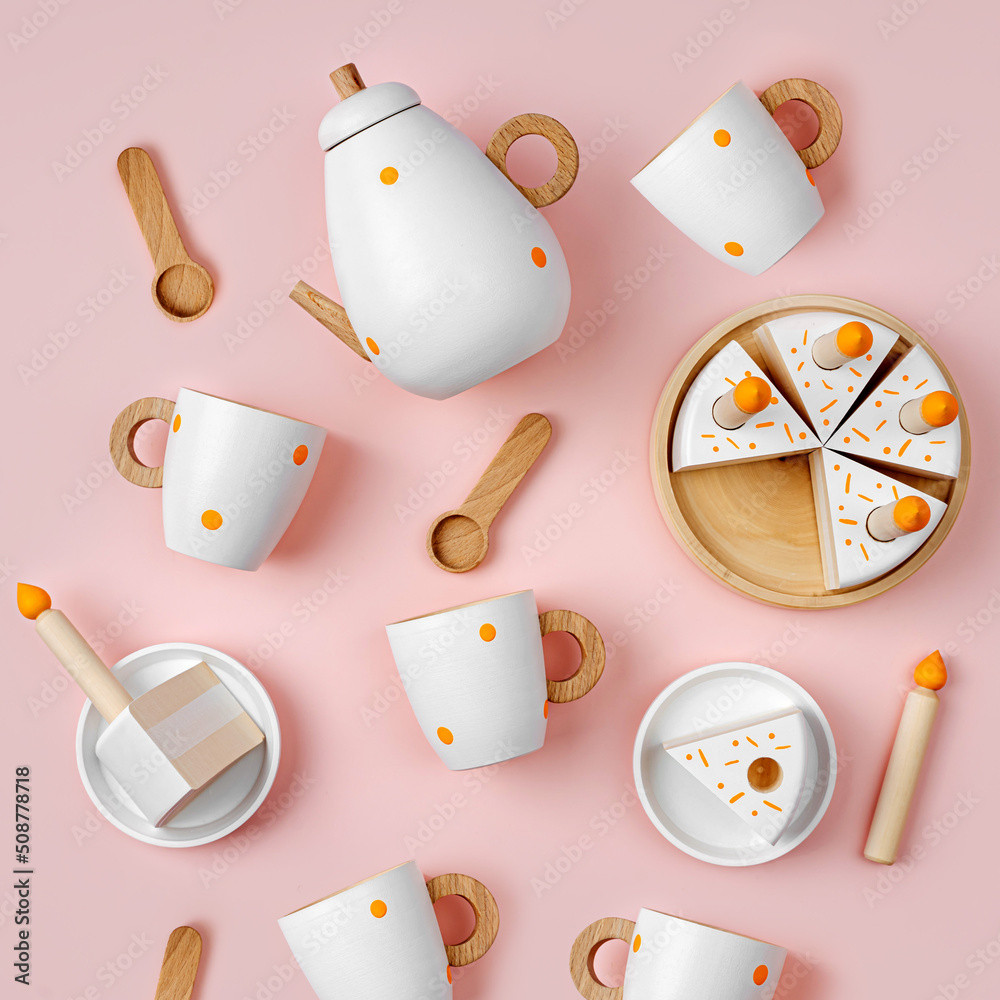
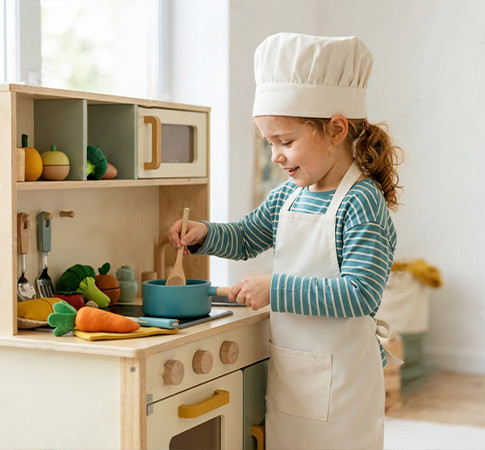
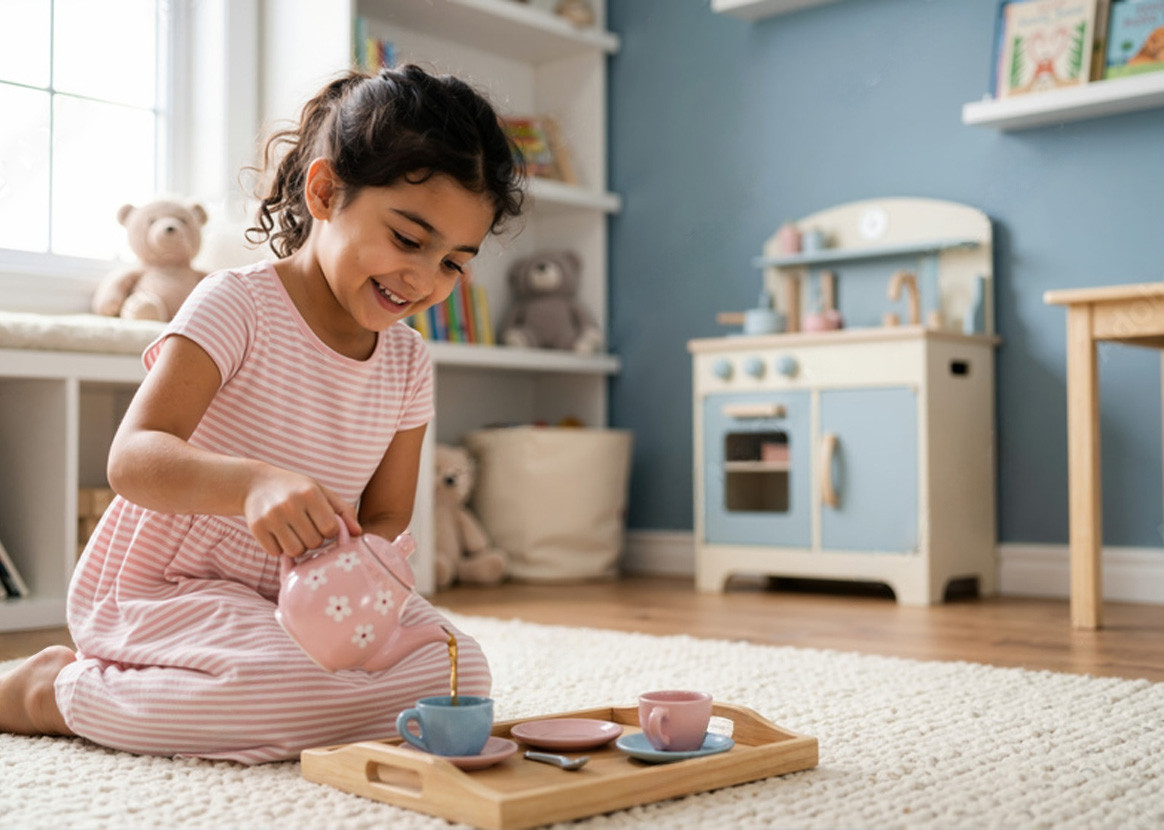
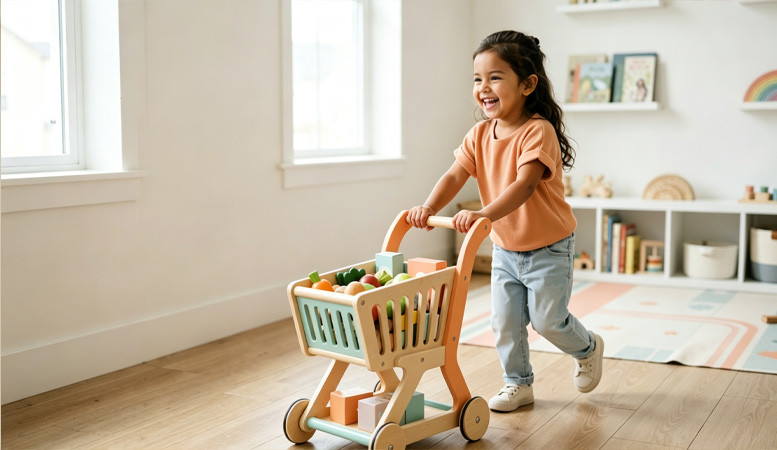
In a world increasingly focused on sustainability, wooden pretend toys stand out as an eco-friendly alternative to their plastic counterparts. These timeless toys are more than just charming and nostalgic — they represent a responsible choice for both the environment and the development of children. A wooden kitchen set, a dollhouse, or a simple set of figurines invites a child to supply the story, the voices, and the rules, while the material itself quietly does something even more important: it returns to the earth when its working life is over. Plastic still dominates the global toy aisle, but the gap is closing fast. Parents are reading labels, retailers are auditing supply chains, and regulators are tightening chemical and recyclability requirements across the EU and North America. At FORESTOY, a wooden toy manufacturer with more than two decades of OEM and ODM experience, we watch this shift every day in our order books: play kitchens, dollhouses, cafés and tool benches are no longer niche "natural parenting" purchases — they are mainstream, design-led products that families keep for years and hand down between siblings. This guide breaks down exactly why wooden pretend play outperforms plastic on environmental impact, durability, safety and play value — and how to tell a genuinely sustainable wooden toy from a greenwashed one. If you are short on time, the comparison table in section three is the fastest place to start. A handcrafted wooden play tent photographed in the material it came from — proof that natural toys invite calmer, nature-connected play. Most toy-buying decisions stop at price, age grading and a bright box. But every toy carries a hidden biography: where its raw material was extracted, how much energy was consumed turning it into a product, how many hours of play it will actually survive, and where it will end up when the child outgrows it. Judged across that full lifecycle, wood and plastic behave almost like opposites. Wood is a renewable, carbon-storing material. A responsibly managed tree absorbs carbon dioxide as it grows, and well-run forestry operations replant what they harvest, so the raw material base regenerates rather than depletes. Plastic, by contrast, begins life as a petroleum derivative — a finite resource that must be extracted, cracked and polymerised at high temperature before it ever reaches an injection-moulding machine. We compare the two materials in depth in What Makes Wooden Toys Different from Plastic Toys?, and the short version is this: the differences are not cosmetic, they are structural. Material choice also shapes the play experience itself. Wood has weight, grain and warmth; it does not feel the same twice. That sensory richness is one reason learning through play advocates and Montessori educators keep returning to natural materials, and it is why a wooden pretend toy tends to stay in rotation long after a battery-powered novelty has been forgotten. One of the primary benefits of wooden toys is their environmental impact. Made from renewable resources such as sustainably harvested wood, these toys are biodegradable and often produced using non-toxic materials. In contrast, plastic toys contribute significantly to global waste, with many ending up in landfills or oceans, where they take centuries to decompose. By choosing wooden toys, families can reduce their carbon footprint and support a greener planet. Quality wooden pretend toys start with certified timber — FSC- or PEFC-controlled beech, birch, rubberwood or pine from managed forests. Certification matters because it turns a marketing claim into an auditable chain of custody. You can read how we apply this in practice on our sustainability page and in How Does Forestoy Ensure Truly Sustainable Production? An untreated or water-based-finished wooden toy breaks down naturally at the end of its life and can often be repaired, refinished, donated or composted. A plastic toy offers no such exit: most municipal recycling streams cannot process mixed polymer toys, so the realistic destination is landfill or incineration. Because plastic toys are cheap to mould, they are often designed to short lifespans — a latch breaks, a battery compartment corrodes, and the whole unit is discarded. Over years of gift-giving that adds up to a startling volume of waste, much of it fragmenting into microplastics rather than disappearing. Machining, sanding and assembling wood requires far less thermal energy than injection-moulding petroleum-based polymers, and offcuts can be reused for smaller components or biomass. Our own production data is one reason wooden toy manufacturing pairs naturally with responsible manufacturing capacity. Wood belongs to a biological cycle: grown, harvested, replanted, and ultimately returned to the soil. Browse our full range of wooden pretend play toys — kitchens, dollhouses, cafés, workbenches and more, all built from certified materials. Durability is another key advantage of wooden pretend toys. Unlike plastic toys, which often break or wear out quickly, wooden toys are built to last. Their sturdy construction makes them resistant to damage, even with heavy use, ensuring they can be passed down from one generation to the next. This longevity reduces the need for frequent replacements, minimising waste and providing long-term value for families. A pretend kitchen is one of the most heavily used toys in any home: doors are slammed, hinges are leaned on, "soup" is spilled, and toddlers climb on the counter. Quality wooden play sets are engineered for exactly this — mortise-and-tenon or screw-and-dowel joinery, thick multi-ply panels, metal-reinforced hinges and rounded, sanded edges. Durability is not an accident of the material; it is a deliberate engineering decision, and it is the reason how wooden toys are made matters as much as what they are made from. Wooden pretend toys usually cost more at the till and far less over time. Divide the purchase price by the number of play sessions a set survives — often thousands across several children — and the cost per play collapses to pennies. Add resale value, which well-kept wooden brands retain far better than plastic, and the arithmetic becomes hard to argue with. The same logic applies to wooden kids' furniture, which is one reason we recommend prioritising wood for anything a child will use daily. A scratched plastic toy is usually a broken toy. A scratched wooden toy is usually a toy that needs a damp cloth and, occasionally, a touch of wax. Simple maintenance — covered step by step in How to Clean Wooden Toys: A Step-by-Step Guide — keeps sets hygienic and attractive for years. That repairability is also why well-made wooden pretend sets so often become hand-me-downs, and why child-development specialists keep linking durable, simple toys to healthier long-term development. Wooden pretend toys align perfectly with sustainable play practices. Their simple, open-ended designs encourage creativity and imaginative play, helping children focus on exploration rather than flashy features. A wooden kitchen set or dollhouse offers countless opportunities for role-playing and storytelling, fostering development while maintaining an eco-conscious approach. A plastic kitchen that beeps, flashes and announces "dinner is ready!" has already made the creative decision for the child. A wooden kitchen leaves the decision open — the same burner becomes a rocket launchpad on Monday and a potion laboratory on Wednesday. Child-development researchers call this open-ended play, and it is one of the strongest predictors of sustained, self-directed engagement. We explore the principle in detail in How Open-Ended Wooden Toys Enhance Montessori and Waldorf Learning. Both Montessori and Waldorf pedagogy favour realistic, natural, low-stimulation materials that let children practise real-life sequences: cooking, caring, shopping, building, mending. That is precisely what pretend play sets deliver, and it explains why Montessori chose wooden toys in the first place. If you are building a Montessori-aligned play space, our Montessori tower and helper furniture range pairs naturally with a play kitchen. No batteries, no script — just a child, a material, and an idea. Teachers and parents consistently report that wooden play sets change the acoustic and emotional temperature of a room. Without constant electronic feedback, children narrate their own play, negotiate roles with siblings, and stay with an activity noticeably longer — a benefit documented across age groups in How Wooden Toys Support Intellectual Development in 3–5 Year Olds. Simplicity is not a limitation of wooden pretend toys; it is their most valuable feature. "Pretend play" covers a wide family of toys, and each type supports a different slice of development. Below are the six categories we manufacture most, with notes on what each one is genuinely good for — not just what it looks like in a catalogue. The heavyweight of pretend play. Sequencing, turn-taking, vocabulary and fine motor control all get a workout. Our 2-in-1 wooden play kitchen and restaurant café flips between two scenarios, doubling the play life of one footprint. Dollhouses are where children rehearse family life, empathy and narrative order. Pair a structure like our three-storey wooden dollhouse with bendable doll-family figures and the stories multiply. Shop play quietly teaches counting, exchange and social scripting. Our wooden coffee shop set is a Montessori-style role-play favourite for exactly this reason. Velcro-and-blade food sets build hand strength and bilateral coordination while introducing food vocabulary. The wooden pizza cutting set is a classic for a reason. Hammering, turning and screwing develop grip, wrist rotation and task persistence. See the tabletop wooden workbench for a compact option that suits smaller playrooms. The most language-rich form of pretend play. Explore our wooden puppet and theatre collection, or read how puppet theatres inspire creativity in practice. A wooden dollhouse is a decade-long toy: first a parallel-play prop, later the stage for fully scripted family dramas. Every one of these sets follows the same sustainability logic: solid or multi-ply wood, water-based finishes, no batteries to replace and no electronics to fail. If you want a deeper developmental read on the category, start with Wooden Pretend Play Toys: Unlocking Imagination and Development and How Wooden Pretend Toys Enhance Children's Social Skills. "Non-toxic" on a box is a claim; a test report is evidence. Reputable wooden toy manufacturers work to EN 71 (Europe) and ASTM F963 (United States), specifying heavy-metal limits for pigments and coatings, formaldehyde limits for composite panels, and mechanical requirements for small parts and edges. Water-based, saliva-resistant finishes are the current best practice for anything a toddler will mouth. Our own protocols are summarised on the safety and quality control page and expanded in How Does Forestoy Ensure Global Safety and Quality? Wood is warm to the touch, subtly textured, and acoustically gentle — a dropped wooden pan does not sound like a dropped plastic one. Children with sensory sensitivities often engage more readily with natural materials, and the weight of solid wood gives proprioceptive feedback that lightweight plastic simply cannot replicate. These are quiet advantages, but they show up daily in classrooms and playrooms. Contrary to a common misconception, finished wood is easy to keep clean: a damp cloth, mild soap and thorough drying are usually all that is needed, and wood's natural properties make it less hospitable to bacteria than many assume. Avoid dishwashers and prolonged soaking, and check our FAQ for material-specific guidance. The full routine is in our wooden toy cleaning guide. By choosing wooden pretend toys over plastic alternatives, parents can support their children's growth while making a positive impact on the environment. These toys combine durability, sustainability and developmental benefits, proving that eco-friendly play is not only possible but also profoundly enriching. As wooden toys have become fashionable, so has greenwashing. Three questions separate substance from slogans. First, is the timber certified, and by whom? Second, are the coatings water-based and independently tested to EN 71 or ASTM F963? Third, does the manufacturer publish anything about energy, waste or replanting — or does the word "natural" do all the work? Our overview in Are Wooden Toys Sustainable? walks through each point, and why eco-friendly wooden toys are the smart choice puts the buying logic in plain language. The greenest toy is the one that never needs replacing. A wooden kitchen bought for a three-year-old is typically still in service when that child is nine — and often again with younger siblings, cousins or a nursery group. Long service life beats recycled content every time, which is why durability sits at the centre of our design philosophy rather than at the edge of it. Built for the second child, the third year, and the neighbour's toddler — longevity is the point. If you are building a curated toy collection rather than a toy box, age-appropriate selection matters as much as material. Our guide to choosing the right wooden educational toy for every age pairs each developmental stage with the right type of set, and the best wooden toys for children's development is a good shortlist to work from. Not every wooden toy is a good wooden toy. Soft, poorly dried timber, thin veneers over particleboard, and solvent-heavy lacquers all exist in the market. Use this checklist before you buy — or before you brief a supplier. Material: solid beech, birch, rubberwood or multi-ply birch — not MDF with a printed foil surface. Finish: water-based, saliva-resistant paint or oil; ask for the EN 71-3 or ASTM F963 test report by batch, not by brand. Joinery: dowels, screws and mortise joints with reinforced hinges; avoid glue-only construction on load-bearing parts. Edges and surfaces: consistently sanded, rounded corners, no splinters, no visible glue squeeze-out. Age grading and small parts: correct for your child, with detachable parts sized safely for the labelled age. Manufacturer transparency: a factory that publishes its quality-control process is far more trustworthy than one that only publishes lifestyle photos. For buyers and brand owners, the same checklist scales into a supplier-audit framework — and if you need a set built to your own specification, our custom OEM/ODM solutions and design and development team handle everything from concept sketches to mass production, as described in how customised wooden toys go from concept to mass production. Sustainability is decided on the workbench, not in the brochure. With over 20 years of experience, FORESTOY is a professional maker of wooden toys. Our R&D team designs unique, durable and finely crafted toys using sustainably sourced wood, ensuring both eco-friendliness and safety. Equipped with advanced facilities, we maintain efficient production, strict quality control and on-time delivery. Dedicated to enriching children's play, we are your trusted partner for high-quality wooden toys. In practice that means FSC-controlled timber purchasing, water-based coating lines, in-house EN 71 and ASTM testing, and a design team that treats durability as a specification rather than a hope. Retailers and brand owners can see the full picture about FORESTOY, browse the complete range on our products index, or read how we support branded lines through OEM and ODM wooden toy manufacturing. The same philosophy extends well beyond pretend play — to wooden outdoor toys, educational toys, DIY and craft kits and wooden music toys. For a broader view of where the category is heading, see why wooden outdoor toys are great for kids and our rundown of the craftsmanship behind eco-friendly wooden toys. Choosing wooden pretend toys is a decision that pays out three times: in a healthier material for your child, in decades of play instead of months, and in a lighter footprint on the planet. Whether you are a parent furnishing a playroom, a retailer building a sustainable assortment, or a brand developing your own play kitchen or dollhouse line, our team can help you get the details right — timber, finish, safety testing, packaging and logistics included. Contact our sales team for a custom solution and a free product brochure, or browse the full wooden pretend play collection to see what is already in production. You can also download our latest catalogue, learn more about FORESTOY, or send an inquiry with your drawings and target price. Eco-friendly play is not a compromise — let us show you what it looks like when it is done properly.Why Eco-Conscious Families Are Switching to Wooden Pretend Toys

Table of Contents
Why the Material a Toy Is Made From Matters
Environmental Impact: Wood vs. Plastic at Every Stage of a Toy's Life
Renewable and Responsibly Sourced
Biodegradable End of Life
The Hidden Cost of Plastic
Lower-Energy Manufacturing
Wood vs. Plastic: A Side-by-Side Comparison
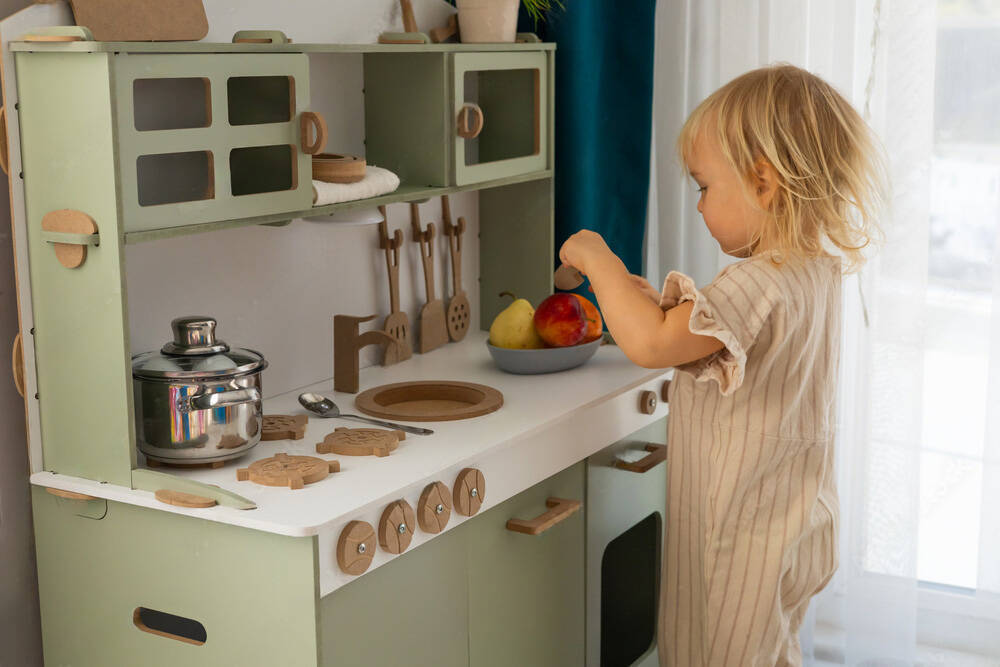
Factor Wooden Pretend Toys Plastic Alternatives Raw material Renewable timber from managed, often FSC-certified forests Petroleum-based polymers, non-renewable Carbon footprint Wood stores carbon; low-energy machining and assembly Energy-intensive extraction, cracking and moulding End of life Biodegradable, repairable, refinishing-friendly Centuries in landfill; fragments into microplastics Durability Decades of use; survives multi-child, multi-generation play Prone to snapping, fading and UV embrittlement Chemical safety Solid wood plus water-based, EN71/ASTM-compliant finishes Potential BPA, phthalates and heavy-metal concerns Play value Open-ended — the child authors the story Scripted features, sounds and lights direct the play Sensory feel Warm, textured, naturally varied grain Cold, slick, visually uniform Long-term value Heirloom potential, strong resale, repairable parts Rapid depreciation, rarely repairable See the Difference in Real Products
Durability and Longevity: Toys Built to Be Handed Down
Engineering That Survives Real Play
The Economics of Buying Once
Repairable, Refinishable, Reusable
Open-Ended Play: Why Simplicity Is the Real Smart Feature
Fewer Features, More Imagination
A Natural Fit for Montessori and Waldorf Homes
Calmer Rooms, Longer Attention Spans
Wooden Pretend Play in Action: Sets That Grow With Your Child
Play Kitchens & Restaurants
Dollhouses & Doll Families
Cafés, Shops & Market Stalls
Cutting Food & Groceries
Tool Benches & Workshops
Puppets & Puppet Theatres
Health, Safety and Sensory Comfort
What "Non-Toxic" Should Actually Mean
The Sensory Case for Wood
Hygiene and Everyday Care
The Longer View: Cost per Play, Heirloom Value and Green Credentials
How to Read an Eco-Claim Honestly
Heirloom Value Is an Environmental Strategy
How to Choose a Quality Wooden Pretend Toy: A Practical Checklist
Why Families, Retailers and Brands Choose FORESTOY
Bring Sustainable Pretend Play Home — or to Your Brand