Why Wooden Toys Matter for Child Development: the insights from global education experts.
- Share
- publisher
- Forestoy
- Issue Time
- May 21,2026
Summary
Discover expert-backed insights from American and European child development authorities on how wooden toys support cognitive growth, creativity, motor skills, and emotional development in early childhood education.
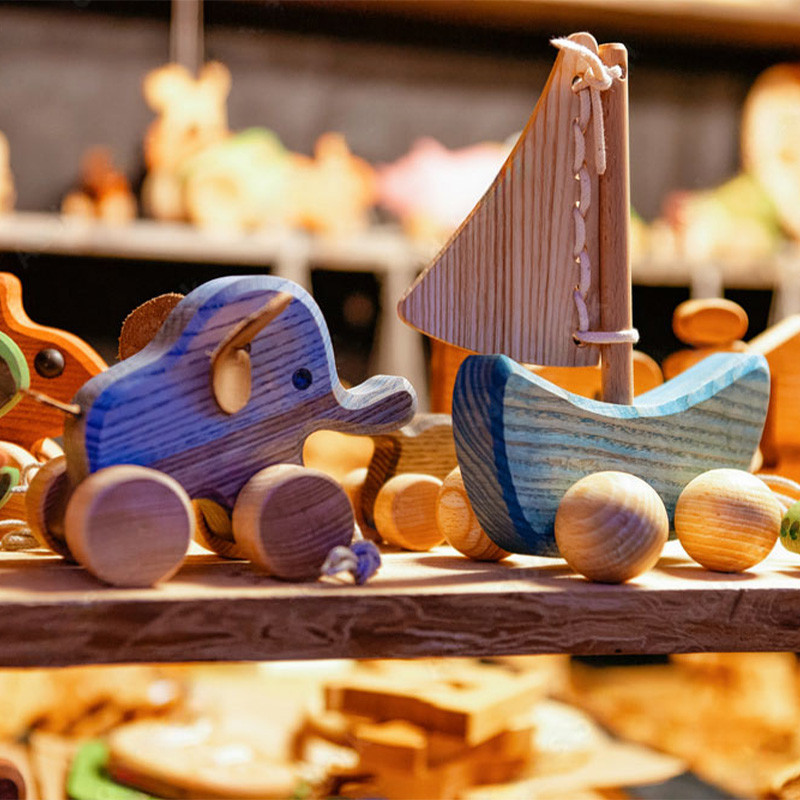
Why Wooden Toys Are More Than Just “Traditional Toys”
In a world dominated by electronic gadgets and plastic toys, wooden toys are making a powerful comeback in early childhood education. Far from being nostalgic artifacts, they are increasingly supported by child development experts, pediatric associations, and early education researchers across Europe and the United States.
Modern research suggests that wooden toys—due to their simplicity, tactile richness, and open-ended nature—can significantly support cognitive, motor, social, and emotional development in young children.
According to the American Academy of Pediatrics (AAP), play is essential for early brain development, especially when it involves hands-on interaction, imagination, and caregiver engagement rather than passive digital stimulation. (AAP Publications)
This article compiles expert opinions, academic findings, and educational frameworks to explain why wooden toys are widely valued in early childhood development—and how brands like Forestoy contribute to this educational ecosystem.
Expert Consensus on Play and Child Development
1. Play is a core driver of brain development (AAP perspective)
The American Academy of Pediatrics emphasizes that play contributes directly to:
* Cognitive development
* Language acquisition
* Social-emotional skills
* Physical coordination
The AAP also highlights that toys are not just entertainment tools, but "facilitators of early brain development”when used in interactive, imaginative contexts. (AAP Publications)
Wooden toys often align naturally with these principles because they:
* Encourage imagination instead of passive consumption
* Require hands-on manipulation
* Promote caregiver-child interaction
2. Simplicity enhances creativity and executive function
Research summarized in early childhood development literature shows that simpler toys tend to produce more complex play behaviors.
A key finding from developmental research at institutions such as the University of Toledo suggests:
Children show longer engagement and more creative play when toys are less structured and less electronically stimulating.
Wooden toys fit this category because they:
* Do not dictate "correct" usage
* Allow multiple interpretations (blocks, animals, puzzles)
* Encourage children to invent rules and stories
European Educational Perspectives on Wooden Toys
1. Montessori education philosophy (Europe & global)
Montessori educators widely prefer wooden toys because they represent real-world materials and sensory authenticity.
Key Montessori principles include:
* Learning through touch and manipulation
* Independence and self-directed play
* Minimal external stimulation
Wooden toys align strongly with these principles by offering:
* Natural textures
* Weight-based sensory feedback
* Simple, functional design
This supports concentration development and sustained attention—key Montessori goals.
2. UK Early Years Foundation Stage (EYFS)
Within UK early education frameworks, wooden toys are commonly used in early learning environments because they support:
* Fine motor skill development
* Sensory exploration
* Imaginative role-play
European educators emphasize that hands-on materials are critical in early developmental stages, especially between ages 2–6.
3. Mokuiku” (Wood Education) in Japan and Europe-inspired learning
A growing educational movement called "mokuiku" (wood education) promotes interaction with natural materials to strengthen:
* Environmental awareness
* Sensory intelligence
* Emotional connection to nature
Research on wooden toy design shows that structured wooden play environments can positively influence developmental stage progression and learning behavior patterns. (CiNii )
American Research on Wooden Toys and Cognitive Development
1. Problem-solving and spatial reasoning
Studies on play materials show that blocks, puzzles, and manipulatives significantly improve spatial skills and early math ability.
The American Academy of Pediatrics notes that toys such as blocks:
* Build fine motor skills
* Support cognitive reasoning
* Enhance spatial awareness
These skills are strongly linked to later academic success. (AAP Publications)
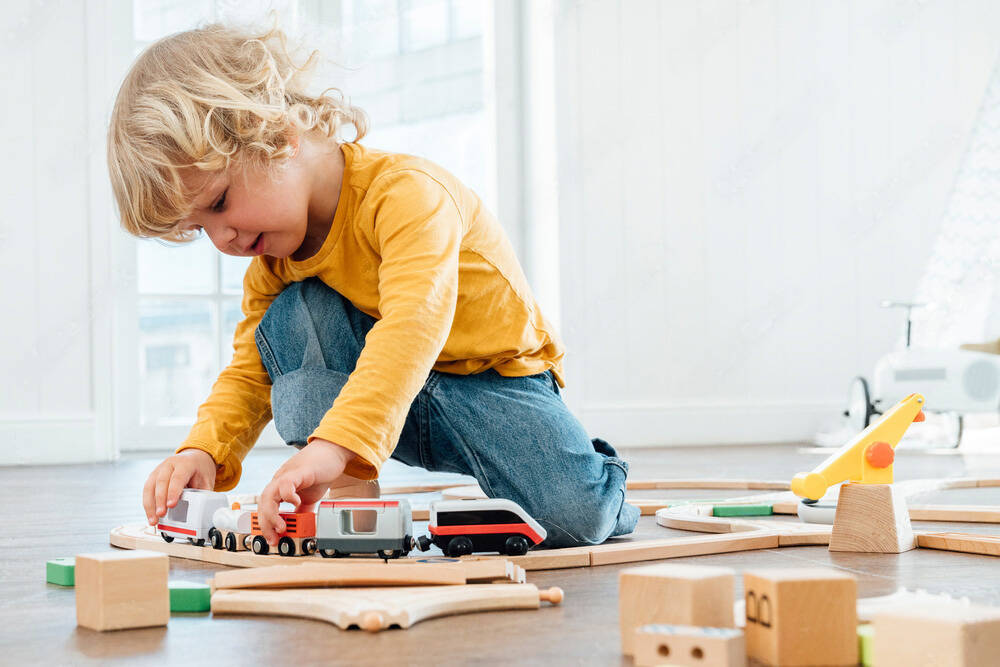
2. Open-ended play supports executive function
Executive function includes:
* Working memory
* Self-control
* Flexible thinking
Research shows that open-ended toys (commonly wooden toys like blocks and figurines) are particularly effective at developing these abilities because they require children to:
* Plan actions
* Adjust strategies
* Imagine multiple outcomes
3. Reduced overstimulation improves learning depth
The AAP also warns that excessive exposure to electronic toys may:
* Reduce caregiver interaction
* Limit language-rich play
* Decrease attention span development
In contrast, simple toys such as wooden materials promote longer and more meaningful engagement. (AAP Publications)
Key Developmental Benefits of Wooden Toys (Expert-Backed)
1. Cognitive development
Wooden toys encourage:
* Logical thinking (puzzles, stacking toys)
* Problem-solving strategies
* Memory and sequencing skills
Research confirms that structured play with manipulatives improves early mathematical thinking and spatial reasoning. (AAP Publications)
2. Fine and gross motor skills
Because wooden toys often require:
* Grasping
* Balancing
* Stacking
* Fitting pieces together
They directly strengthen:
* Hand-eye coordination
* Finger dexterity
* Muscle control

3. Sensory development
Wooden toys provide richer sensory input than plastic due to:
* Natural weight differences
* Texture variation
* Temperature responsiveness
*Acoustic feedback when objects interact
Research indicates that natural materials enhance sensory exploration and attention span. (MontessoriToys.info)
4. Emotional and social development
Wooden toys often encourage:
* Cooperative play
* Role-playing scenarios
* Emotional storytelling
These activities strengthen:
* Empathy
* Communication
* Social negotiation skills
5. Creativity and imagination
Because wooden toys lack predefined functions, they allow children to:
*Invent narratives
*Create multiple uses for one object
*Explore symbolic thinking
This is strongly linked to creativity development and cognitive flexibility.
Sustainability and Safety Advantages
1. Environmental sustainability
Wooden toys are generally:
* Biodegradable
* Durable over time
* Less reliant on plastic production cycles
This supports environmental education and reduces long-term waste.
2. Durability and long-term use
Compared to plastic toys, wooden toys:
* Last longer
* Resist breakage better
* Can be passed down between siblings
This increases both educational value and long-term cost efficiency.
3. Safety considerations
Experts note that high-quality wooden toys:
* Contain fewer synthetic chemicals
* Avoid electronic overheating risks
* Reduce small electronic component hazards
However, safety depends on proper finishing and compliance with toy safety standards.
What Experts Do NOT Claim (Important Balance)
It is important to clarify what research does NOT support:
--Wooden toys are not automatically superior in all cases
--Plastic toys can also be highly educational (especially STEM toys)
--Learning outcomes depend on interaction quality, not just material
As pediatric experts emphasize, the most important factor is how toys are used—not what they are made of.
How Forestoy Supports Early Childhood Development
Forestoy is a company with over 20 years of experience in the development and production of wooden toys.
Recognizing the naturalness, openness, and safety of wooden toys, and deeply understanding the principles of early childhood education globally, Forestoy seamlessly integrates these principles into its product design.
Using Montessori-style open-ended play as its primary form of expression, Forestoy combines education with entertainment, emphasizing both functionality and playability for children's intellectual development, while prioritizing safe and exquisite craftsmanship and the use of sustainable materials.
Years of accumulated product and team expertise have enabled Forestoy to continuously win customers and market share in the wooden toy industry, becoming a professional wooden toys manufacturer with an ever-growing reputation.
Summary of Expert Consensus
Across U.S. and European research, the key agreement is:
✔ Play is essential for brain development
✔ Simple toys encourage deeper creativity
✔ Hands-on manipulation builds cognitive and motor skills
✔ Natural materials enhance sensory engagement
✔ Open-ended play supports long-term learning outcomes
Conclusion: Why Wooden Toys Still Matter in Modern Education
Wooden toys are not a trend—they are aligned with decades of child development research and educational theory from both Europe and the United States.
From Montessori classrooms in Europe to pediatric recommendations in the U.S., experts consistently highlight the importance of:
* simplicity
* sensory richness
* open-ended play
* active imagination
For brands like Forestoy, wooden toys represent more than products—they represent a developmental philosophy grounded in how children naturally learn best.