Why Instrumental Toys Are Better Than Electronic Toys for Children
- Share
- publisher
- Green Forest Toys & Gifts CO.,Ltd
- Issue Time
- Dec 2,2024
Summary
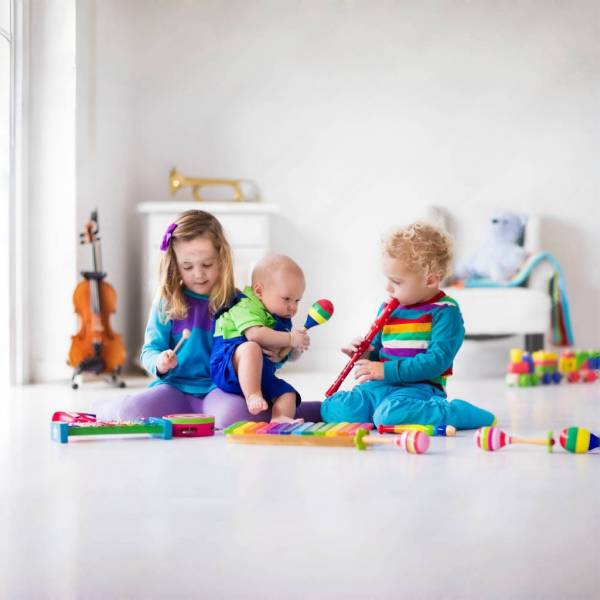
Children benefit greatly from hands-on experiences, and instrumental toys provide an active way for them to engage with music.

INSTRUMENTAL TOYS VS ELECTRONIC TOYS
Why Instrumental Toys Are Better Than Electronic Toys for Children
Hand a child a wooden maraca and a battery-powered toy that plays music at them, and you are offering two completely different experiences. One invites the child to make the music; the other asks them to listen to it. Children benefit greatly from hands-on experiences, and instrumental toys provide an active way for them to engage with sound — encouraging creativity, learning, and real participation instead of passive listening. This guide explains, from a manufacturer's point of view, why instrumental toys consistently deliver more developmental value than electronic toys, and how to choose pieces that are built to last.

The short answer: electronic toys perform for the child, while instrumental toys are performed by the child. Because the child supplies the action, the idea, and the sound, every minute of play builds motor control, listening skills, and creative confidence — benefits a pre-recorded tune simply cannot reproduce.
What Counts as an Instrumental Toy?
An instrumental toy is a real, playable musical instrument scaled down for small hands — not a gadget that imitates one. Tambourines, xylophones, drums, maracas, shakers, tone blocks, and wooden music tree toys all belong to this family. The defining feature is simple: the sound exists only because the child strikes, shakes, scrapes, or taps it. That single design decision is what separates a genuinely educational toy from a battery-operated novelty, and it is why high-quality wooden educational toys remain a fixture in Montessori and early-years classrooms worldwide.
Instrumental Toys vs Electronic Toys: A Side-by-Side Comparison
Both types make sound. The difference is who — or what — is doing the work.
| Aspect | Instrumental (wooden) toys | Electronic toys |
|---|---|---|
| Who creates the sound | The child strikes, shakes, or taps — every sound is earned | A speaker plays pre-recorded tunes at the push of a button |
| Type of play | Active, open-ended, child-led | Passive, reactive, toy-led |
| Sensory feedback | Real vibration, real pitch changes, natural wood texture | Artificial sound with no physical cause the child can feel |
| Developmental payoff | Motor skills, rhythm, memory, cause-and-effect thinking | Mostly entertainment and short attention capture |
| Durability | Solid wood survives years — often handed down | Batteries, circuits, and plastic joints fail fast |
| Noise at home | Child controls volume by how hard they play | Loudspeaker volume is fixed and often hard to soften |
5 Ways Instrumental Toys Outperform Electronic Toys
Each benefit below maps to a specific area of child development — and to a category we manufacture on our own factory floor.
Encourages Active Engagement
Instrumental toys allow children to become active participants in music creation. Whether it is a tambourine, xylophone, or drum, these toys give kids control over sounds and rhythms. This hands-on approach makes playtime far more engaging and stimulates a child's natural curiosity about how music works — where does a higher note come from? What happens if I tap faster? Electronic toys, by contrast, often reduce children to passive listeners, offering little opportunity for exploration or self-expression.
Why it matters: active play is the engine of early brain development. The more a child's own action produces the result, the stronger the learning loop becomes — something a one-button sound effect can never trigger.
Develops Cognitive and Motor Skills
Playing an instrument means striking keys, beating a drum, or shaking maracas — precisely the repeated, controlled movements that build both fine and gross motor skills. Creating rhythms and melodies also boosts cognitive development, improving memory, focus, and problem-solving as children learn to sequence sounds and keep a steady beat. The same hands-on logic runs through our wider collection of wooden shape sorters and stackers and wooden puzzles and blocks, while larger movement play such as wooden indoor gym toys strengthens the gross-motor side. Electronic toys skip most of this, because the child is never required to interact deeply with the music being played.
Why it matters: keeping a beat is closely linked to early reading and counting skills — rhythm training quietly lays the groundwork for phonological awareness and number sense.
Fosters Creativity and Emotional Expression
Instrumental toys empower children to experiment with sound, fostering creativity and a genuine sense of accomplishment. They can invent their own music, express emotions they do not yet have words for, and explore an artistic side that no pre-set melody can reach for them. That same creative confidence grows through wooden DIY and craft sets, storytelling play with a wooden toy theatre, and role-play with wooden hand puppets. Electronic toys, on the other hand, usually play fixed recorded tunes — restricting imagination and positioning the child as a consumer of content rather than its creator.
Why it matters: self-generated play — making a sound, a story, or an object — builds the confidence to try, fail, and retry, which is the foundation of creative thinking later in life.
Enhances Sensory Experiences
Instrumental toys deliver a rich, multi-sensory experience: children feel the vibration travel through the wood, hear pitch change as they move along the keys, and watch their own action turn into sound. These tactile and auditory cues help children connect to music in a meaningful, physical way. Similar hands-on sensory learning happens with a wooden zen garden kit or the careful finger work of wooden maze and lacing toys. Electronic toys may produce appealing sounds, but they lack the touchable cause-and-effect that helps kids build a deeper understanding of the world.
Why it matters: multi-sensory input — touch, sight, and hearing at once — is how young children wire up their understanding of cause and effect fastest.
Promotes Independence
With instrumental toys, children take charge of their own play — choosing what sound to make, how loud to make it, and how long to stay engaged. That autonomy builds confidence and decision-making skills that spill over into every other part of the day. Child-led environments supported by tools like a wooden learning tower and open wooden play scenes extend the same principle: the child directs, the toy follows. Electronic toys, with their pre-set functions and limited interactivity, tend to dictate the pace and content of play, leaving little room for independence.
Why it matters: a child who decides what happens next in their play is practising the self-direction and initiative that formal learning will later demand of them.
How to Choose a Quality Wooden Instrumental Toy
Not every wooden toy is made to the same standard. Before you buy — whether for a family, a classroom, or a retail range — run through this checklist:
- Solid, sustainably sourced wood. FSC-certified hardwood feels heavier, sounds better, and survives years of enthusiastic drumming.
- Smooth finish, non-toxic paint. Edges should be rounded and sealed; finishes should be water-based and compliant with EN71 and ASTM F963.
- Genuine, pleasant sound. A well-made xylophone is tuned, not shrill — children listen longer to instruments that sound good.
- Age-right size and weight. Mallets and handles must suit small hands; pieces should be too large to swallow for children under three.
- Simple, open design. The fewer fixed functions, the more the child's imagination has to work with.
Our own safety and quality control process covers every one of these points — from raw material inspection to finished-product drop testing — before any order leaves the factory.
Why Families and Brands Choose FORESTOY
With over 20 years of experience, FORESTOY is a professional maker of wooden toys. Our R&D team designs unique, durable, and finely crafted toys using sustainably sourced wood, ensuring every piece is both eco-friendly and safe. Equipped with advanced facilities, we maintain efficient production, strict quality control, and on-time delivery for clients across Europe, North America, and Asia. From our custom wooden music toys to the full range of wooden educational toys, every product is built to enrich children's play and to meet the exact specifications of your brand — OEM drawings, custom packaging, and retail-ready finishes included.
Frequently Asked Questions
At what age can children start playing instrumental toys?
Shakers and maracas can be introduced from around 6 months, once grasping is secure. Drums, xylophones, and tambourines suit toddlers from about 12 months, when striking with a mallet becomes deliberate. Always match the toy to the age label — small parts are not suitable for children under three.
Are electronic toys always a bad choice?
Not inherently — many are safe and entertaining in moderation. The concern is proportion: electronic toys tend to dominate playtime because they demand so little effort. Instrumental and other hands-on educational learning toys give far more back per minute of play, so they deserve the larger share of the toy shelf.
Do instrumental toys really support school readiness?
Yes. Keeping a beat, sequencing sounds, and matching pitch all exercise the same listening and pattern-recognition skills used in early reading and maths. Musical play pairs especially well with role-play sets such as wooden kitchen and accessory toys, counting-friendly wooden food and fruit toys, and family wooden board games that add turn-taking and rule-following.
Can I order custom instrumental toys with my own branding?
Absolutely. FORESTOY offers full OEM/ODM service — from your artwork and custom colours to private-label packaging — with low minimum order quantities and worldwide shipping. Just request a free quotation and catalog and our team will respond within one working day.
Talk to a Real Wooden Toy Maker
Choosing instrumental toys over electronic ones is choosing play that children do — not watch. If you are a parent looking for one honest toy, a retailer building a shelf, or a brand planning a custom wooden music line, we would love to help. Visit the FORESTOY homepage to browse the full wooden toy collection, see how learning through play really works, and then contact our team for a free brochure and quotation. A real person — not an auto-responder — reads every message, and we reply within one working day.