Wooden Toys Made in China: Quality, Safety, OEM and Export Guide for Global Buyers
- Share
- publisher
- Forestoy
- Issue Time
- Nov 11,2026
Summary
A practical export guide to wooden toys made in China: manufacturing clusters and capability, EN 71 / ASTM F963 / CPSIA compliance, OEM, ODM and private-label models, MOQ and lead-time benchmarks, pre-shipment QC, packaging and export documentation, plus a factory selection checklist.
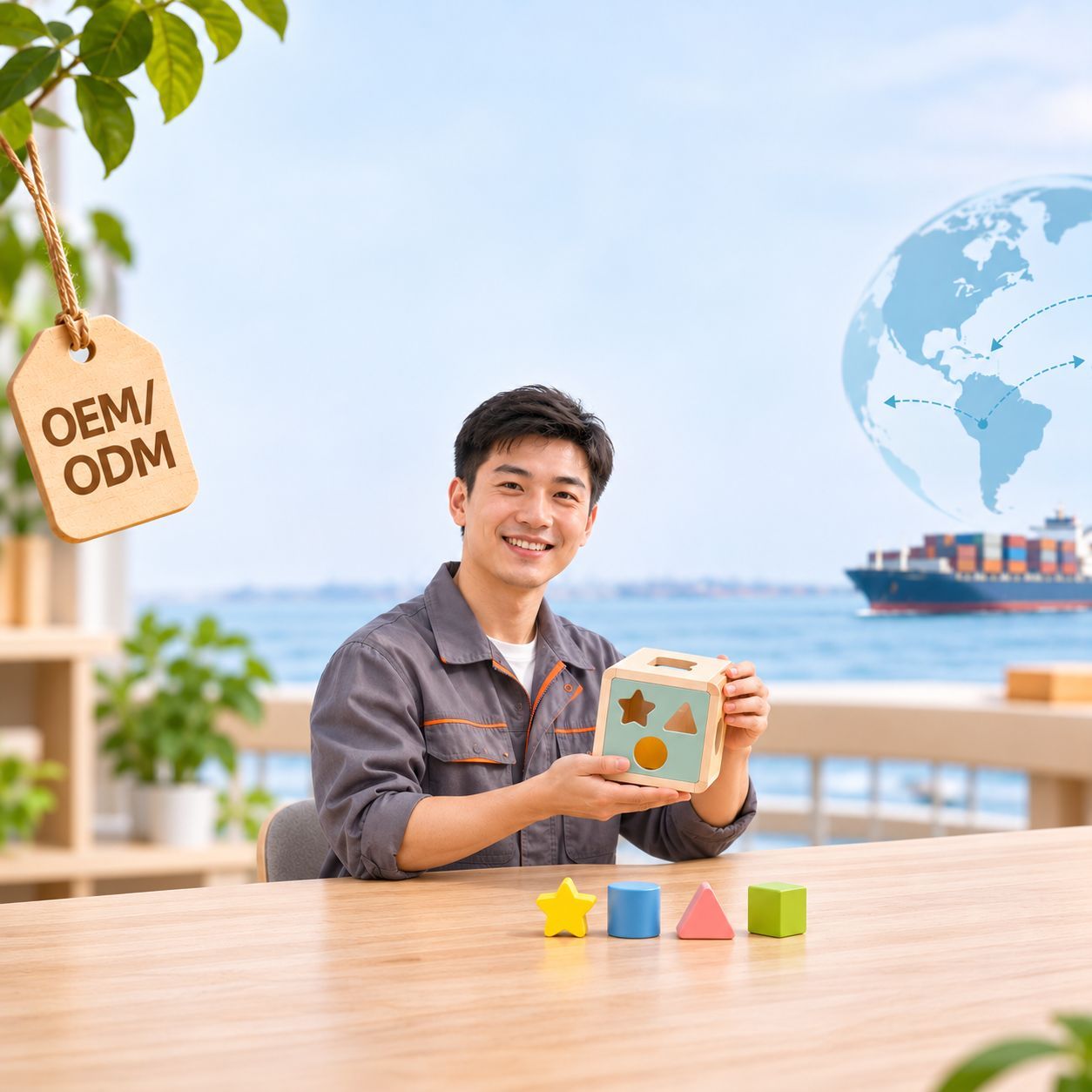
China has been the world's toy factory for close to four decades, and its share of global toy production still sits at roughly 70 percent. For a buyer, "wooden toys made in China" is therefore not a claim about origin — it describes an entire industrial ecosystem: specialised woodworking clusters, paint and finishing suppliers, testing laboratories, packaging printers and freight forwarders within a two-hour drive of each other. That density is why Chinese wooden toy manufacturing can deliver quality that is genuinely difficult to match elsewhere — and also why the quality range across suppliers is so wide. For a B2B buyer, the phrase describes three things at once: a product category, a manufacturing model, and a compliance obligation. Statista puts the global toys and games market above USD 100 billion, and wooden toys have grown faster than the category average as retailers respond to plastic-reduction targets. The commercial opportunity is real. The risk is concentrated in one place: how well you qualify the factory behind the product. Wooden toy production in China is clustered rather than scattered. Zhejiang — where Yunhe county is known as China's wooden toy capital — together with Guangdong, Jiangsu and Fujian hosts the densest concentration of woodworking, spraying, assembly and packaging capacity. The clustering produces advantages buyers can measure: Capability claims mean little without evidence. Ask a prospective factory which equipment it runs in-house — CNC centres, automatic sanders, filtered spray booths, laser engravers — and how many lines serve export orders. Our own wooden toy manufacturing capacity page documents this in detail, and works as a benchmark for what a real factory should look like on paper. Material selection determines cost, durability and compliance at the same time, which is why it belongs at the design stage rather than the quotation stage. Beyond wood, three specifications drive real-world quality: the finish system (water-based, EN 71-3 compliant paints rather than solvent-based), the adhesive class (E1 or better formaldehyde emission), and hardware (nickel-free, torque-tested screws and fittings on load-bearing items such as learning towers and gym sets). This is where a supplier's engineering depth becomes visible. During custom wooden toy design and development, a competent factory challenges your drawing on part geometry, grain direction, coating coverage and assembly sequence before tooling is cut — design-for-manufacturing feedback that saves money and prevents recalls. Brands developing a first range often start with our guide to OEM wooden toy development in China. Toy safety is the part of sourcing where shortcuts are most expensive. A single recall can cost more than an entire season's margin, and regulators now publish alert data publicly. EN 71 is the European harmonised standard underlying CE marking under Toy Safety Directive 2009/48/EC. EN 71-1 covers mechanical and physical properties — small parts, sharp edges, drop and tension tests. EN 71-2 covers flammability. EN 71-3 covers migration of 19 elements from toy materials, which is where paint chemistry matters most. A compliant supplier tests every paint colour in your order, not a generic sample. ASTM F963 is the US consumer safety specification for toys, covering mechanical hazards, flammability, heavy metals and phthalates. It is mandatory under CPSIA and enforced by the CPSC. The current revision aligns closely with ISO 8124, which reduces duplicate testing for multi-market programmes. The Consumer Product Safety Improvement Act adds substance limits on lead and phthalates, mandatory third-party testing by CPSC-accepted laboratories, tracking labels on products and packaging, and a Children's Product Certificate. The CPSC's electronic certificate filing requirement means compliance data must be transmitted at the time of entry — importers who cannot obtain documentation from their factory quickly find goods unable to clear customs. Ask for reports from accredited laboratories (SGS, Intertek, TÜV, Bureau Veritas) that name your product, your materials and your production batch. Our toy safety and quality control process is built around this expectation, and the differences between the three main standards are broken down in our guide to EN 71 versus ASTM F963 versus CPSIA. Most global buyers now work in one of three models. Choosing the right one early prevents expensive rework later. Whichever model you choose, confirm four things in writing: who owns the tooling and design files, what the MOQ is per SKU and per order, how many sampling rounds are included, and who pays for third-party testing. For a deeper comparison of the commercial trade-offs, see our private-label wooden toys guide. The practical parameters below reflect our own order book across 40-plus export markets and are a reasonable planning baseline for wooden toy programmes. Two rules save buyers from costly mistakes. Book production slots before peak season rather than negotiating price during it. And treat MOQ as negotiable against commitment — a three-order annual framework often unlocks a lower first order. Pre-shipment inspection is the last chance to catch problems while they are still the factory's responsibility. A professional sequence runs as follows. Also ask for the factory's internal first-pass yield and defect data. A mature wooden toy operation tracks these numbers monthly; a workshop that "inspects everything" but produces no data is telling you something useful. Packaging failures generate more chargebacks than product failures, particularly for e-commerce sellers. Confirm these five points before production starts: Buyers building a retail-ready programme usually need packaging and product developed together; our guide to wooden toy packaging for retail covers the structural and compliance detail. A short, verifiable checklist separates real factories from intermediaries. Two companion guides go deeper: how to choose a reliable wooden toy manufacturer in China, and the twelve-point wooden toy factory quality and safety checklist. If you are still mapping the process end to end, start with how to source wooden toys from China, and score candidates side by side with our wooden toy supplier comparison framework. Forestoy has manufactured wooden toys and children's furniture for more than 20 years, supplying over 100 international brands across 40-plus export markets. The operation is built for buyers who need documentation as much as product: Buyers who need verification before committing can request our factory audit report, certificate package and production capacity dossier — and compare them against any other supplier on the shortlist. Buyers comparing whole supplier models will also find our sustainable wooden toy manufacturing guide useful when sustainability credentials enter the evaluation. If you are sourcing wooden toys made in China for the coming season, start with evidence rather than a catalogue. Send your product list or design brief, target market, packaging requirements and volume estimate, and the Forestoy export team will respond with product recommendations, a quotation covering full material and testing specifications, realistic lead times, and samples of comparable production items. Request the factory audit report, certificate package and free samples through our Forestoy export team, or review our OEM, ODM and private-label wooden toy solutions to see how a custom programme is structured from brief to container. Our engineering team replies within one business day — and we will tell you honestly if your project is not a fit for our lines. Sources and references: Statista, global toys and games market revenue data; China Toy and Juvenile Products Association export statistics and industry cluster data (Yunhe, Zhejiang); EN 71-1, EN 71-2 and EN 71-3 (CEN) under Toy Safety Directive 2009/48/EC; ASTM F963 toy safety specification; ISO 8124 series; CPSIA and CPSC third-party testing and electronic certificate filing requirements; GB 6675 (China); AS/NZS ISO 8124 (Australia and New Zealand); Canada Consumer Product Safety Act, Toys Regulations; EU Regulation on Deforestation-free Products (EUDR); FSC chain-of-custody certificate C131173; ISTA 3A packaging performance testing; AQL 2.5 and AQL 4.0 inspection standards.
What Does 'Wooden Toys Made in China' Mean for B2B Buyers?
China's Wooden Toy Manufacturing Capabilities
Materials and Product Development
Material Typical Use Notes for Buyers Beech (FSC-certified) Premium toys, learning towers, furniture Dense, stable, takes fine sanding; highest cost Rubberwood Mid-range toys, blocks, puzzles Good strength-to-cost ratio; check moisture content Birch plywood Puzzles, flat-pack toys, play panels Stable, excellent for laser cutting MDF Painted toys, decorative parts Must be E1 or better formaldehyde class Paulownia Value lines, large lightweight parts Soft; limited durability under heavy play Toy Safety Standards and Testing
EN 71
ASTM F963
CPSIA
Other Market Requirements
OEM, ODM and Private-Label Manufacturing
MOQ, Sampling and Production Lead Times
Stage Typical Range What Affects It Sample development (modified existing design) 7–15 days Finish complexity, artwork readiness Sample development (new OEM design) 20–35 days Tooling, structural testing, revisions MOQ per SKU (stock designs) 300–1,000 pcs Material purchasing minimums MOQ per SKU (custom tooling) 500–2,000 pcs Mould amortisation, jig cost Bulk production 30–45 days Order size, season, finishing steps Peak-season buffer (August–October) add 10–15 days Factory utilisation Quality Control Before Shipment
Packaging, Labelling and Export Support
How to Choose a China Wooden Toy Manufacturer
Why Global Buyers Work with Forestoy
Request a China Wooden Toy Export Consultation