Wooden Toys China: How to Choose a Reliable Wooden Toy Manufacturer for Your Brand
- Share
- publisher
- Forestoy
- Issue Time
- Aug 20,2026
Summary
The global wooden toys market reaches USD 31.2B in 2025 and is projected to hit USD 57.1B by 2035. Learn how to evaluate wooden toy manufacturers in China: certifications (EN71, ASTM F963, ISO 8124), QC systems, OEM/ODM capabilities, production capacity, and MOQ — with a 10-question supplier checklist.
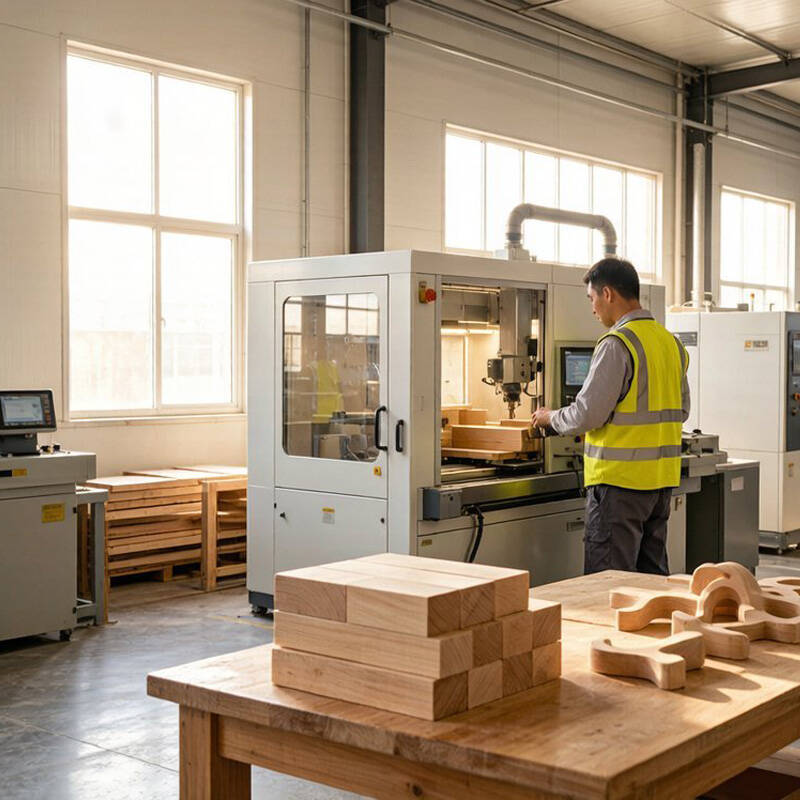
The global wooden toys market was valued at USD 31.2 billion in 2025 and is projected to reach USD 57.1 billion by 2035, growing at a compound annual rate of 6% (Global Market Insights, 2026). The sustainable toys segment is expanding even faster — from USD 42.1 billion in 2025 to a projected USD 97.1 billion by 2033 (11% CAGR, Data Bridge Market Research, 2026). As 86% of global toy industry leaders acknowledge sustainability as decisive, with 90% ranking it a top priority (STAC, Sustainable Toys Report) — brands, retailers, and e-commerce sellers are steadily shifting sourcing budgets from plastic toward responsibly made wooden toys from China. That demand points overwhelmingly to one country. China produces roughly 40% of the world's wooden toys: the Yunhe industrial cluster in Zhejiang Province alone hosts more than 1,100 manufacturers and 30,000 skilled workers, exporting to 82 countries (People's Daily, 2025). But "made in China" is not a quality guarantee in itself. The difference between a smooth, profitable product launch and a costly recall lies in how carefully you evaluate your wooden toy supplier China side of the table. This guide walks B2B decision-makers through the critical evaluation criteria — certifications, quality control, OEM/ODM capability, production capacity, and MOQ — so you can source wooden toys made in China with confidence and build a partnership that survives years of retail seasons. China's wooden toy industry offers three structural advantages that are difficult to replicate elsewhere: Selecting a wooden toy manufacturer China is a high-stakes decision. Among the many wooden toy manufacturers China has to offer, the most dependable are defined by their systems — not their marketing. Six criteria separate reliable long-term partners from one-order vendors. Experience matters in wooden toys more than in almost any other consumer product. Wood is a living material — it expands, contracts, and varies in density — and only factories with years of hands-on production data know how to engineer around its behavior: selecting kiln-dried hardwood, designing rounded corners, controlling moisture content, and specifying finishes that pass chemical migration tests. A credible benchmark for a wooden toys manufacturer in China is 15–20 years of continuous wooden toy manufacturing, with a product range spanning multiple categories — educational toys, pretend play, games, music toys, kids' furniture, and Montessori-inspired learning towers. A wide range signals R&D depth: a manufacturer that can engineer a toddler learning tower can also engineer a shape sorter or a play kitchen. The real value of a manufacturing partner is not just production — it is product development. The best wooden toy manufacturers in China operate full in-house design teams (structural and graphic designers), engineering teams, and market-research functions. A disciplined factory runs a structured development funnel — market research → design → white mockup → physical testing → customer feedback → mass production — and quotes sample lead times of 7–15 days. Forestoy, for example, guides clients through every stage from design drawings to finished samples under one roof. See how our wooden toy design and development process turns a concept into a shelf-ready product. Never assume safety compliance — verify the systems. Ask whether the factory has: Reliable factories also publish their AQL (Acceptable Quality Limit) standards. A common professional benchmark is AQL major 2.5 / minor 4.0 — no more than 2.5% major and 4.0% minor defects per lot. Forestoy applies exactly this standard across its wooden toy quality control system, with three free inspections per order. Toy safety certification is a legal requirement, not a marketing badge. When evaluating a factory, confirm which standards it genuinely supports with valid, current certificates: Beyond toy safety, look for sustainability credentials that increasingly determine retail acceptance: FSC certification (Forest Stewardship Council Chain of Custody) proving wood is sourced from responsibly managed forests, ISO 14001 for environmental management, and ISO 45001 for occupational health and safety. These are verifiable by certificate number — Forestoy, for instance, holds FSC C131173, BSCI, EN71, ASTM F963, AS/NZS ISO 8124, and Canadian SOR compliance. Capacity defines whether a wooden toy factory China can scale with your brand. Ask for concrete numbers: monthly output, number of production lines, CNC capacity, and painting/printing throughput. Forestoy runs 200,000-piece monthly production capacity, ships to Europe, North America, and Australia, and delivers bulk orders in 45–60 days after confirmation. MOQ deserves equal scrutiny. A factory offering flexible MOQs — with transparent tiered pricing — is better positioned for growing brands than one locked into large minimums. Also check whether the factory keeps buffer capacity for peak season (Q3–Q4 in the toy industry) so your launch dates don't slip. Our wooden toy factory manufacturing capacity page documents the full production and inspection flow for full transparency. In wooden toys, the product and its packaging are inseparable at retail. Evaluate: Manufacturers serving supermarket chains and e-commerce sellers typically bundle free photography, mail-order packaging design, and QC support into their service scope — a strong signal of B2B maturity. Samples are your best risk-reduction tool. A professional evaluation covers five steps: A disciplined factory follows this exact sequence — white mockup → internal physical testing → customer feedback → final sample — typically within 7–15 days. Use this checklist in your next supplier conversation: Since 2003, Forestoy has dedicated more than 20 years exclusively to wooden toys and children's furniture — a rare focus in an industry where factories often chase margin across categories. Today the company: Whether you're launching an educational line, expanding into pretend play, or building a kids' furniture collection, Forestoy brings the design, engineering, safety, and scale to take you from concept to shelf — backed by custom wooden toy solutions built around your brand's roadmap. To verify before you commit, request a factory audit report and free samples — our product team responds within 12 hours.Why Source Wooden Toys from China?
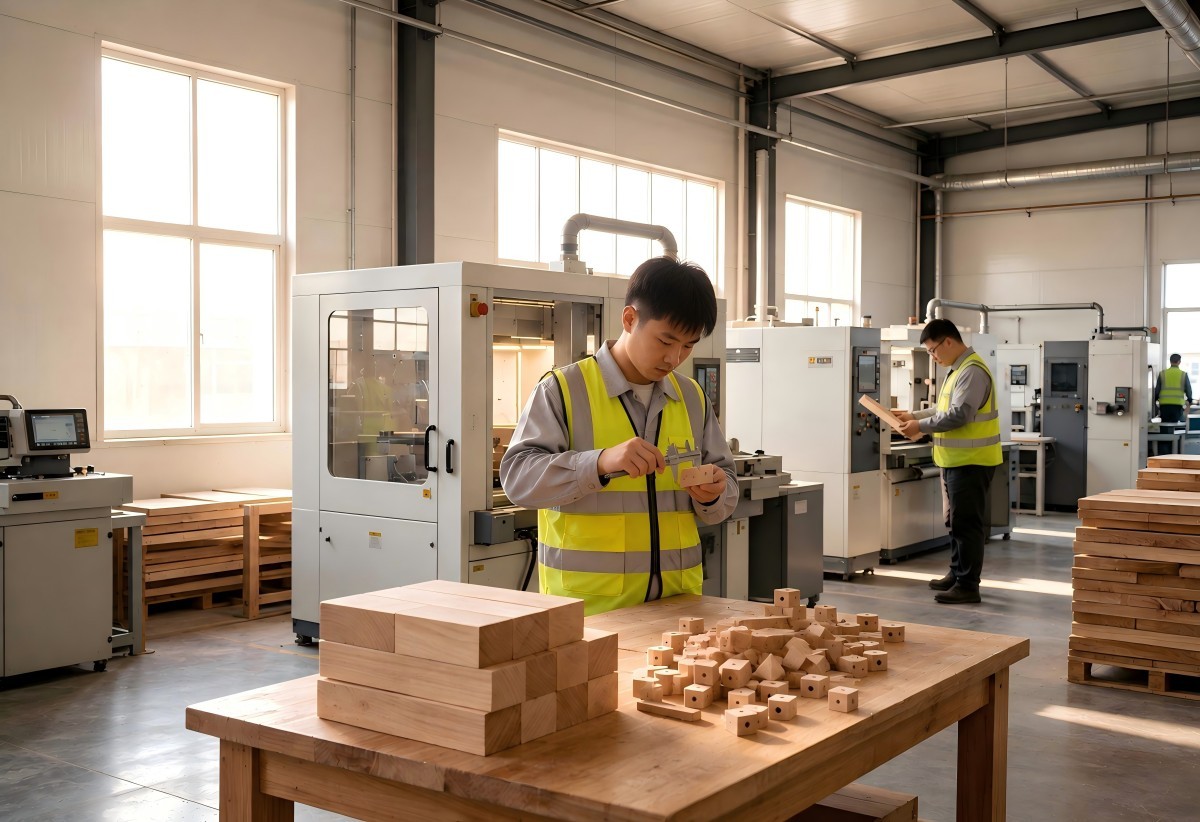
What to Look for in a Wooden Toy Manufacturer in China
1. Manufacturing Experience and Product Range
2. OEM and ODM Capabilities
3. Quality Control and Product Safety
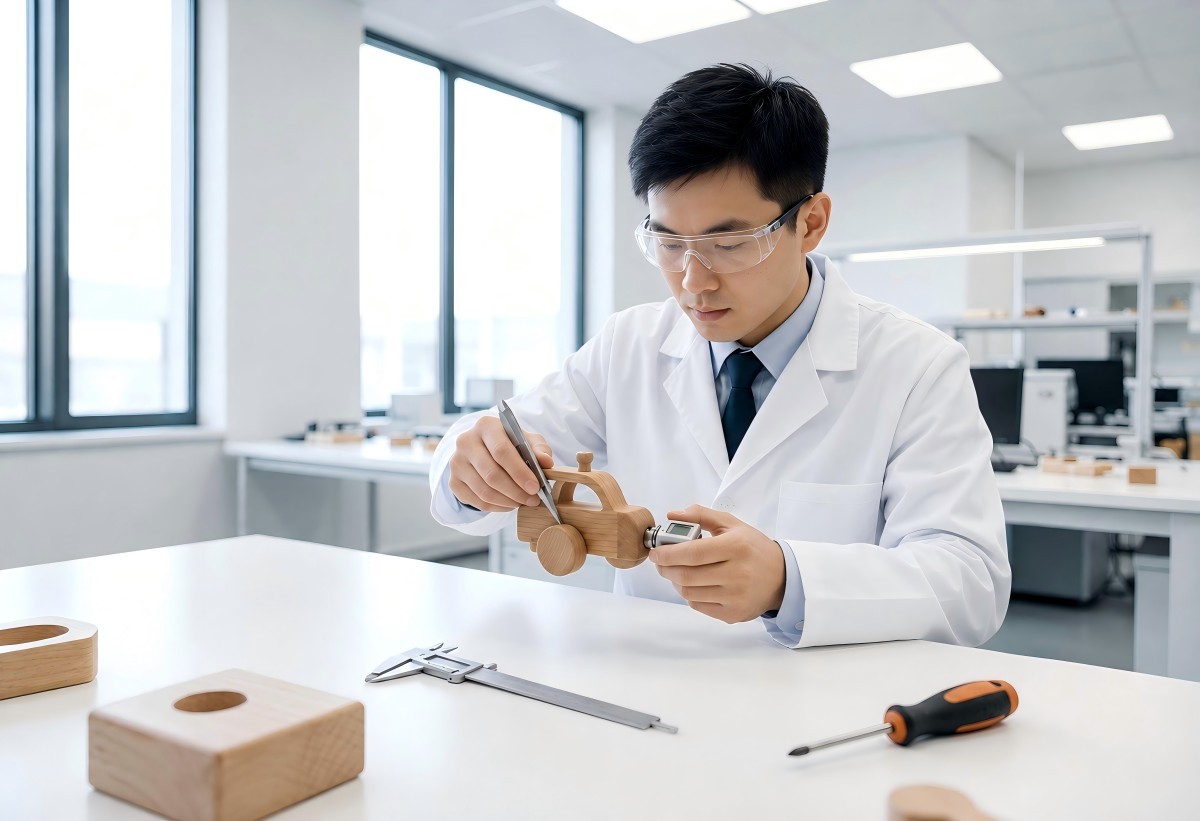
4. Certifications and Testing
Standard Market What It Covers EN 71 European Union Physical & mechanical safety, flammability, chemical migration limits ASTM F963-23 United States Mandatory under CPSIA; expanded water-bead toy safety rules effective March 12, 2026 CPSIA United States Lead content limits, phthalates restrictions, tracking labels, Children's Product Certificates (CPCs) ISO 8124 International Universal framework for toy safety across design, production, and finished products GB 6675 China Domestic compulsory safety standard 5. Production Capacity and MOQ
6. Packaging, Branding and Logistics Support
How to Evaluate Samples Before Placing a Bulk Order
Questions to Ask a China Wooden Toy Supplier
Why Forestoy Is a Long-Term Wooden Toy Manufacturing Partner