Why kids love to play games?
- Share
- publisher
- Green Forest Toys & Gifts CO.,Ltd
- Issue Time
- Dec 2,2024
Summary
Kids love to play games because games provide a perfect blend of fun, challenge, and learning, catering to their natural curiosity and energy.
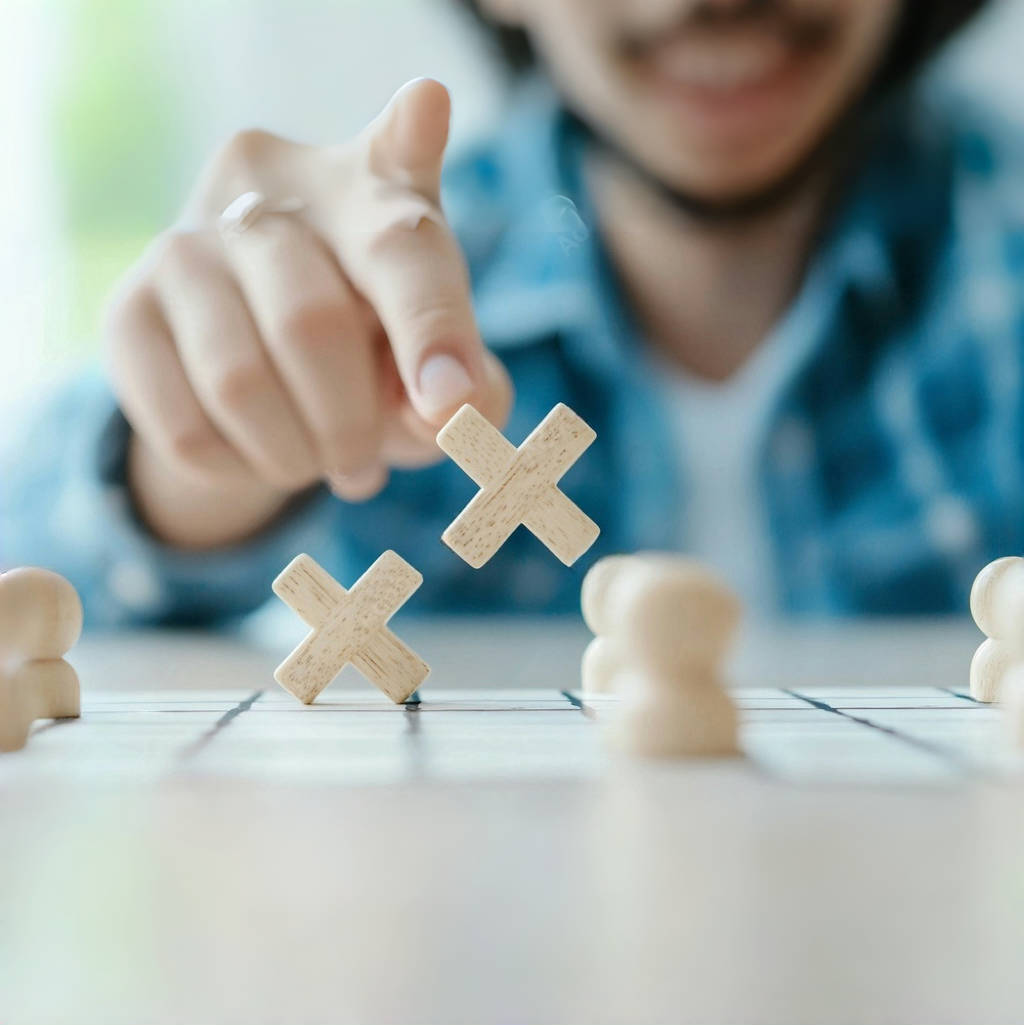
Forestoy Insights · The Power of Play
Ask any child what they love most, and the answer is almost always the same: playing games. Games provide a perfect blend of fun, challenge, and learning, catering to children's natural curiosity and energy. But there is real science behind that delight — and choosing the right wooden games can turn every giggle into genuine growth. In this guide, the team at FORESTOY explores exactly why kids love to play games, what happens in their brains and bodies while they play, and how thoughtfully crafted wooden games make that magic even stronger.
1. The Science of Play: Why Kids Are Wired to Love Games
Play is not a pastime children invented — it is a biological instruction. From lion cubs wrestling to chimpanzees solving puzzles, young animals across the natural world learn survival skills through play, and human children are no different. Developmental psychologists describe play as the primary "work" of childhood: a self-chosen, intrinsically motivated activity through which children rehearse the physical, cognitive, and social demands of adult life in a low-stakes setting.
Neuroscience adds a compelling layer to the story. When a child anticipates a game — shaking the dice, hunting for the right puzzle piece, waiting for their turn — the brain's reward circuitry releases dopamine, the neurotransmitter associated with motivation and pleasure. This is the same chemistry that makes games feel exciting and makes children want to play "just one more round." Crucially, dopamine peaks not when the reward arrives, but when it is anticipated, which is why a well-designed wooden puzzle or block game with clear goals and achievable challenges keeps children engaged far longer than passive entertainment.
Play is also how the brain builds itself. The American Academy of Pediatrics notes that game-based play strengthens executive functions such as working memory, impulse control, and cognitive flexibility — the very skills that predict school readiness and lifelong learning. In short, children love games because their brains are built to be shaped by them. Our article Why Wooden Toys Matter for Child Development takes a deeper look at what global education experts say on this topic.
2. Fun and Excitement: The Magic That Keeps Kids Coming Back
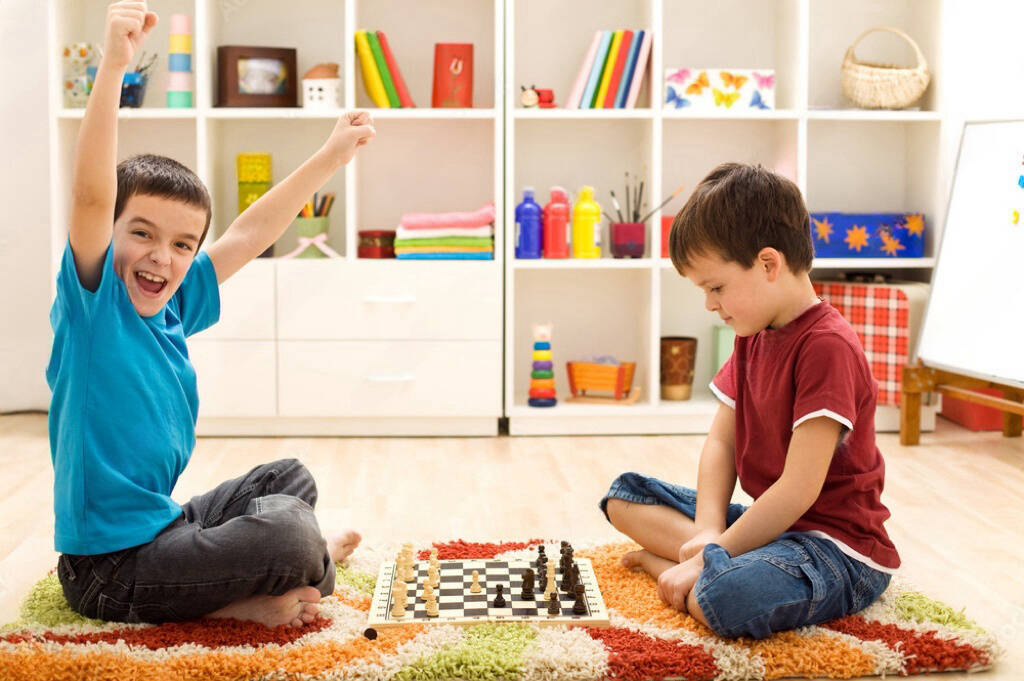
At the most basic level, games are simply entertaining — and often full of surprises. A tower that might topple, a race that could go either way, a hidden piece waiting to be found: games keep children engaged and happy because the outcome is never fully predictable. That delicious uncertainty is the secret ingredient of fun, and it is exactly what screens struggle to replicate in three dimensions.
Physical games add another layer of delight: the satisfying clack of wooden pieces, the tumble of blocks, the spin of a spinner. Tactile, real-world play engages the senses in a way that keeps young minds anchored in the present moment. This is one reason families are rediscovering traditional wooden games — their simple mechanics produce pure, screen-free excitement that works for toddlers, teens, and grandparents alike.
Laughter itself is developmentally valuable. Shared laughter during play lowers stress hormones, strengthens attachment between children and caregivers, and builds positive associations with learning. When fun and connection arrive together, children absorb more — and ask to play again tomorrow.
3. Creativity and Imagination: Where Games Come Alive
Many games encourage kids to think creatively, imagine scenarios, and explore new ideas. A set of colorful blocks becomes a castle, a bridge, a spaceship, or a zoo — sometimes all four in a single afternoon. Unlike single-purpose toys, open-ended games hand the story over to the child, and that narrative freedom is precisely what young imaginations crave.
Imaginative play is not frivolous; it is rehearsal for creative thinking. Children who regularly invent rules, characters, and storylines practice divergent thinking — the cognitive ability to generate multiple solutions to a problem, which researchers link to later success in math, science, and the arts. Our custom open-ended wooden toys are designed around exactly this principle: no fixed outcome, infinite possibilities.
Pretend play supercharges the same muscle. A wooden kitchen becomes a restaurant, a market stand becomes a business empire, and a puppet theatre becomes a stage. For a closer look at this world, see our guide to wooden pretend play toys and child development, or browse our full custom pretend play collection to see how we bring imagination to life in wood.
4. Skill Development: Learning Disguised as Play
Through games, kids develop problem-solving, critical thinking, coordination, and social skills in an enjoyable way — often without noticing they are learning at all. This is what educators call "stealth learning": because the child's attention is locked on the game, the brain treats every challenge as play rather than work, and skills are absorbed almost effortlessly.
Different games train different abilities, and a well-stocked play shelf covers them all:
| Skill Area | What Happens During Play | Ideas from Our Collection |
|---|---|---|
| Logical thinking | Planning moves, predicting outcomes, adapting strategy | Wooden board games and wooden Connect Four |
| Fine motor skills | Grasping, stacking, threading, and placing pieces with precision | Wooden maze and lacing toys |
| Shape & space reasoning | Rotating, matching, and fitting shapes into place | Wooden shape sorters and stackers |
| Language & literacy | Letter recognition, spelling games, storytelling | Wooden alphabet and writing toys |
| Spatial engineering | Building structures, balancing, testing structural ideas | Wooden construction toys |
Because every child develops at their own pace, we also recommend reading how to choose the perfect educational toy for every age before building your play collection, and exploring our complete range of custom wooden educational toys designed in partnership with educators worldwide.
5. The "I Did It!" Effect: Achievement and Confidence
Completing levels, solving puzzles, or winning competitions gives children a sense of accomplishment that is difficult to find anywhere else in a child's day. That glowing "I did it!" moment is more than pride — it is a measurable boost to self-efficacy, the deep-seated belief in one's own ability to succeed. Children with strong self-efficacy persist longer at hard tasks, recover faster from mistakes, and approach new challenges with curiosity instead of anxiety.
Great games engineer these victories carefully. The best wooden puzzles sit in what psychologists call the zone of proximal development: hard enough to demand effort, achievable enough to guarantee eventual success. Each completed puzzle re-sets the child's internal bar slightly higher, which is why children so often demand a "bigger one" the moment they finish. Our article on why jigsaw puzzles are more than just fun explores this cycle of challenge and reward in detail.
Importantly, wooden games teach children to lose gracefully, too. A wooden board game played with family shows children that losing is temporary, rules apply to everyone, and the next round is always available. Resilience, it turns out, can be carved from beech wood.
7. Safe Exploration and Stress Relief: Emotional Growth Through Play
Games provide a safe environment for children to explore challenges and test boundaries without real-world consequences. Inside the magic circle of a game, a wrong move costs nothing but another turn. Children can be brave, experiment with strategies, fail, and try again — building the emotional foundations of healthy risk-taking while their bodies stay perfectly safe. This is equally true outdoors, where our wooden outdoor games let children climb, race, and explore with sturdy, natural equipment parents can trust.
Playing games also helps kids relax, release energy, and focus, especially after structured schoolwork. Child therapists increasingly use game play as a regulation tool: the predictable rules, rhythmic turn-taking, and tactile comfort of wooden pieces have a calming effect on busy nervous systems. For children who spend hours following instructions at school, self-directed play is not a luxury — it is recovery. Montessori educators have understood this for a century, as we discuss in why Montessori toys are important and in our guide to wooden Montessori toys as a development tool.
By combining fun with emotional development, games become a vital part of a child's growth and happiness — a natural regulator in an increasingly fast-paced childhood.
8. Curiosity and Challenge: The Engine That Drives Improvement
Games that offer mysteries, puzzles, or progressive difficulty keep kids eager to learn and improve. A child who begs for "one more try" at a maze or a memory game is displaying the exact mindset educators spend years trying to cultivate: intrinsic motivation. When the desire to improve comes from inside the child rather than from stickers or grades, learning becomes self-sustaining.
Wooden games are masters of progressive challenge. A wooden maze can grow from a simple path to a complex labyrinth; a stacking tower can rise taller with every attempt; a memory game can add one more pair each week. Because wooden games rarely "complete," children can escalate the challenge themselves — an early and powerful experience of setting and chasing their own goals.
Curiosity also thrives on novelty of material. The natural grain, weight, and warmth of wood invite touching, comparing, and investigating in a way plastic rarely does. If you are weighing materials for your family or your product line, our comparison on what makes wooden toys different from plastic toys covers the sensory and developmental differences in detail.
9. Why Wooden Games Make Everything Kids Love Even Better
Every reason above — the fun, the imagination, the achievement, the connection — is amplified when the game itself is crafted from natural wood. Wooden games are warmer to the touch, quieter to play with, and far more durable than their plastic counterparts, surviving decades of enthusiastic play and often passing from sibling to sibling. They are also kinder to the planet: our games are crafted from sustainably sourced wood and finished with child-safe, water-based paints that meet EN71 and ASTM standards.
For families, wooden games offer a calm aesthetic that fits real homes. For retailers and brands, they offer a premium story: craftsmanship, sustainability, and heirloom quality. At FORESTOY, we have watched our traditional wooden games bring joy that transcends generations in markets across Europe, North America, and beyond.
Ready to Delight the Next Generation of Players?
From classic board games to custom-designed play sets, our wooden games are engineered for safety, built for longevity, and finished with love.
10. Choosing the Right Game for Every Age and Stage
Because children love games that match their growing abilities, matching the game to the age is the surest way to spark delight. Here is how we think about it at FORESTOY:
Sort, Stack & Discover
Little hands love shape sorters, stackers, and simple insert puzzles. These first games build fine motor control and teach the basic grammar of play: fit, match, celebrate.
See shape sorters & stackers →Imagine & Build
Blocks, thematic puzzles, and first pretend sets feed the imagination explosion of the preschool years. Learn more about this stage in our guide to intellectual development in 3–5 year olds.
See puzzles & blocks →Strategy & Rules
Board games, mazes, and word games introduce rules, strategy, and healthy competition — the golden age of family game night.
See wooden board games →Rhythm & Sound
Xylophones, rhythm sticks, and sound games add a musical dimension to play, training listening skills and timing for every age group.
See music toys →Move & Compete
Garden games, ring toss, and outdoor bowling burn energy while sharpening coordination — play that moves the whole body.
See outdoor games →Make & Create
DIY and craft kits let older children design, build, and personalize their own games — creativity with a tangible result. Discover why in why DIY wooden toys are essential for child development.
See DIY & craft kits →11. Let's Bring the Joy of Play to More Children Together
Children will always love games — the laughter, the challenge, the triumph of a puzzle finally solved. What changes is the quality of the games we put in their hands.
For over two decades, FORESTOY has been dedicated to creating high-quality wooden toys that inspire imagination and learning. Our expert R&D team designs unique, durable games crafted from sustainably sourced wood, combining eco-friendly materials with rigorous child safety. With advanced facilities, we ensure efficient production, strict quality checks, and timely delivery for brands, retailers, and educational programs worldwide.
Whether you are launching a new game line, customizing a classic, or sourcing wooden games for your brand, our specialists will guide you from first sketch to final shipment.
Committed to enhancing children's play experiences, FORESTOY is your trusted partner for exceptional wooden games. Reach out to us today — we would love to hear about the games you want to create.