Unlocking Infinite Worlds: A Comprehensive Guide to Wooden Train Set Compatibility and Scalability
- Share
- publisher
- Forestoy
- Issue Time
- Aug 14,2025
Summary
Wondering if wooden train sets are compatible? Discover which brands work together, compare BRIO, Hape, Bigjigs, Thomas Wooden Railway and more, plus expert tips for expanding your railway collection.

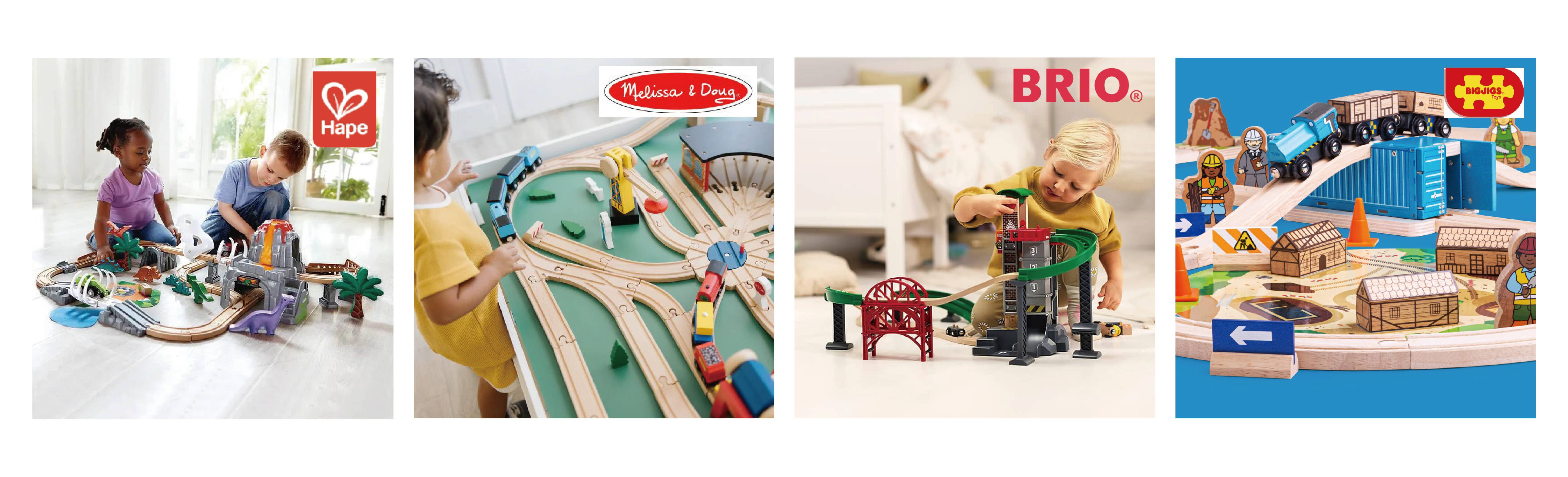
Choosing a wooden train set is exciting, but expanding your railway can quickly raise an important question: will tracks and trains from different brands actually fit together? Whether you're a parent hoping to extend an existing railway, a retailer selecting products for your customers, or a toy brand planning a new product line, compatibility matters. Buying an expansion set only to discover that it doesn't connect properly can be frustrating, costly, and disappointing. Sourcing or building your own wooden railway line? Skip the consumer sections and go straight to the custom wooden train OEM/ODM section — or send us the track system you want to match and get a compatibility and quotation review. Expanding a railway at home or in the classroom? Start with the compatibility chart, then check the systems you should never mix before you buy anything new. The good news is that most major wooden train brands are designed around a common track standard, allowing tracks, trains, bridges, and accessories from different manufacturers to work together. However, there are a few important exceptions that every buyer should understand before making a purchase. As a wooden toy manufacturer with more than 20 years of OEM and ODM experience, Forestoy has developed and produced wooden railway products for international brands across multiple markets. During product development, compatibility testing is an essential part of our engineering and quality control process, helping ensure that new products integrate smoothly with mainstream wooden railway systems while meeting global safety standards. In this guide, you'll learn: Yes. Most wooden train sets are compatible with one another. Leading brands such as BRIO, Bigjigs, Hape, Melissa & Doug, KidKraft, Janod, Tender Leaf Toys, and Thomas Wooden Railway (wooden series) generally follow the same wooden track connection standard. This allows families to mix tracks, trains, tunnels, bridges, and many accessories across brands. However, there are a few notable exceptions: If you're planning to expand an existing railway, checking compatibility before purchasing will help you avoid unnecessary expense and ensure a smoother play experience. Tip: Even among compatible brands, small manufacturing tolerances may affect how tightly certain connectors fit. This is normal and usually does not impact play performance. Manufacturers building a new railway range work from the same chart in reverse: they pick a target system, then engineer connector dimensions, rail height and magnetic coupling performance to match it. You can see how we handle that in our custom wooden vehicle and train manufacturing programme. Standard Track Gauge The distance between the rails is remarkably consistent across most major brands, allowing trains to roll smoothly from one manufacturer's track to another without interruption. Universal Connector Design The familiar peg-and-slot connection found on most wooden railway tracks has become an industry norm. This simple but effective design makes it easy to combine straight tracks, curves, switches, bridges, and specialty pieces from different collections. Magnetic Train Couplings Most wooden locomotives and train cars also use magnetic couplers with similar dimensions, allowing rolling stock from different brands to connect during play. While magnet strength and orientation may vary slightly, compatibility is generally very high. Consistent Manufacturing Standards Leading manufacturers understand that customers often expand their railway collections over many years. Designing products that integrate with existing systems improves customer satisfaction while increasing the long-term value of each train set. From a manufacturing perspective, however, achieving true compatibility requires much more than simply matching connector shapes. At Forestoy, every new wooden railway product undergoes careful evaluation throughout the development process. Our engineering team checks connector dimensions, rail alignment, assembly tolerance, magnetic coupling performance, and repeated durability testing to help ensure that products work smoothly with mainstream wooden railway systems. These quality control procedures not only improve compatibility but also enhance safety, durability, and the overall play experience for children. Compatibility is an engineering input, not a marketing claim. Before you invest in tooling, here is what we put in writing for every railway project: 20+ years OEM/ODM · Reply within 24 hours on business days · NDA available One of the biggest advantages of wooden railway toys is the freedom to expand your collection over time. Unlike many toy systems that lock you into a single brand, most wooden train manufacturers follow similar track dimensions and connector designs, making it easy to mix and match products. Below is a closer look at some of the world's most popular wooden train brands and how they compare. BRIO — The Industry Benchmark When discussing wooden railway compatibility, BRIO is often considered the benchmark. Since introducing its iconic wooden railway system decades ago, BRIO has helped establish the connector style and track dimensions that many manufacturers continue to follow today. Because so many manufacturers design around BRIO-style dimensions, BRIO tracks are generally compatible with products from Bigjigs, Hape, Melissa & Doug, KidKraft, Janod, Tender Leaf Toys, and many other brands. For families, this means adding new tunnels, stations, bridges, or trains without replacing an existing railway system. Bigjigs Rail Bigjigs Rail has become one of Europe's most popular wooden railway collections thanks to its excellent value and wide product range. Its track geometry closely follows the traditional wooden railway standard, allowing users to combine straight tracks, curved tracks, crossovers, switches, bridges, stations, and rolling stock with most mainstream wooden railway brands. Bigjigs also offers a large selection of themed accessories — including airports, construction sites, farms, fire stations, and dinosaur worlds — which can easily expand an existing railway without compatibility concerns. Hape Wooden Railway Hape has earned an excellent reputation for combining educational play with high manufacturing quality. Its railway products are designed to integrate smoothly with most standard wooden railway systems. Many Hape expansion packs can be added directly to existing BRIO-style layouts, making them a popular upgrade option. Melissa & Doug Melissa & Doug has introduced millions of children to wooden toys through its educational product range. Its wooden railway collection generally follows standard dimensions, allowing tracks and trains to connect with most major wooden railway brands. For parents looking to gradually expand a railway over several birthdays or holidays, this compatibility offers significant long-term value. KidKraft KidKraft railway sets are designed around the same general wooden railway standard used by many leading brands. Most KidKraft wooden tracks can connect directly with BRIO-style systems, allowing children to create increasingly complex railway worlds as their collections grow — especially on a sturdy play table with room for the layout to spread out. Janod French toy manufacturer Janod combines elegant European design with practical play value. Its railway products generally follow standard connector dimensions, making them compatible with most wooden railway brands. These accessories integrate well into existing railway systems without requiring proprietary tracks. Tender Leaf Toys Tender Leaf Toys has become increasingly popular for its beautifully designed wooden play collections. Its railway range is intentionally developed around common compatibility standards, allowing users to mix tracks and accessories with many established railway brands. For parents who appreciate premium aesthetics, Tender Leaf offers a stylish alternative while maintaining practical expandability. Thomas Wooden Railway Many families first discover wooden trains through Thomas & Friends, making compatibility one of the most frequently asked questions. The answer depends on which Thomas product line you own. Thomas Wooden Railway: the classic collection is generally compatible with BRIO-style wooden tracks and most major wooden railway brands. Tracks, trains, bridges, and accessories can usually be mixed without difficulty. Thomas TrackMaster: completely different. It uses molded plastic tracks with a unique connection system that is not compatible with traditional wooden railway tracks. Buying Tip: Before purchasing expansion packs, always confirm whether your existing set belongs to the Thomas Wooden Railway series or the TrackMaster system. If you manufacture or sell toys, these formats are also the ones your customers will expect your own range to match. We build custom wooden trains and vehicles to BRIO-style specifications, so a new product line slots straight into an existing collection. From a consumer's perspective, compatibility simply means that two pieces of track connect together. From a manufacturer's perspective, however, achieving reliable compatibility involves much more. At Forestoy, every wooden railway product goes through multiple engineering reviews before entering production. Beyond connector dimensions, our team evaluates several critical factors that directly affect how well products perform with existing railway systems: The Five-Step Compatibility Verification We Run Before Tooling Reference matching We measure reference pieces from the target wooden railway system: gauge, rail height, peg diameter and slot depth. Dimension & tolerance review Technical drawings confirm every mating part stays inside an agreed tolerance window, not just on average. Prototype fit & coupling test Physical samples are assembled with mainstream branded track and rolling stock to check fit, level and magnet performance. Repeated-cycle durability test Connectors and couplings are cycled repeatedly to confirm the fit holds after months of real play. Compliance & production sign-off Safety and material documentation is finalised, then production parameters are locked before mass manufacturing. These engineering details may not be visible during play, but they make a significant difference in the quality, longevity, and compatibility of a wooden railway system. For toy brands and retailers developing private-label collections, these manufacturing standards are especially important. Well-designed compatibility not only improves customer satisfaction but also encourages future expansion purchases, increasing the lifetime value of a product line. You can see the same process documented for our design and development programme, or read how OEM wooden toys are developed in China step by step. While most traditional wooden train sets share similar designs, not every train system can be connected together. Understanding the differences before buying expansion pieces can save time, money, and frustration. The biggest compatibility problems usually happen when consumers confuse wooden railway systems with plastic track systems. Let's look at the most common examples. TrackMaster — A Different Railway System One of the most common compatibility mistakes involves Thomas TrackMaster. Although it shares the same Thomas & Friends theme as the classic wooden railway collection, TrackMaster uses a completely different design. Thomas Wooden Railway = compatible with many wooden railway brands. Thomas TrackMaster = not compatible with wooden railway systems. Before purchasing additional Thomas products, always check the product line carefully. Take-n-Play / Take Along Systems Another commonly confused system is Take-n-Play (also known as Take Along in some markets). These products were designed as portable play systems rather than traditional wooden railways. Because of these differences, Take-n-Play products generally cannot be combined with BRIO, Bigjigs, Hape, Melissa & Doug, and other wooden railway brands. Although the characters and themes may look similar, the underlying railway systems are completely different. Older IKEA LILLABO Railway Sets IKEA LILLABO is another example where compatibility requires some attention. Many newer IKEA LILLABO railway products follow the common wooden railway format and can connect with popular brands. However, some older versions may have slightly different connector dimensions, tighter connections, and small variations in track height. These differences do not necessarily mean they are unusable. Many families successfully combine IKEA tracks with other brands, but some adjustments may be needed. Buying tip: If you already own an older IKEA railway system, test one or two expansion pieces before purchasing a large collection. Why Do Some Wooden Train Sets Not Fit? Even among wooden railway systems that follow similar standards, small differences can happen. The reasons include: At Forestoy, material selection and production control are carefully managed because consistency is essential for both product quality and customer experience. One of the biggest advantages of wooden train sets is that children can continue expanding their world as their imagination grows. A small starter set can gradually become a busy city railway, a countryside adventure, a transportation network, or a complete imaginative play world. However, smart planning makes expansion easier and more affordable. Choose a Compatible Starter System The first set you purchase determines your future expansion options. For maximum flexibility, choose a system that follows common wooden railway standards. Look for: standard wooden connectors, compatible expansion accessories, availability of replacement parts, and support from multiple brands. A good starter system should not limit creativity — it should open more possibilities. Our dinosaur number train set, for example, grows with a child from first counting practice to full railway layouts. Expand With Essential Track Pieces Many beginners purchase only trains and scenery but overlook the importance of track variety. A balanced railway usually needs straight tracks, curved tracks, switch tracks, bridges and elevations, and crossing pieces. Adding these pieces gradually allows children to design increasingly advanced layouts. Add Imaginative Play Accessories A wooden railway becomes much more engaging when combined with storytelling elements. Popular additions include train stations, fire stations, farms and airports, construction sites, villages, and mountains and forests. Browse ready-made wooden play scenes and sets, or add a wooden car transporter to move vehicles between stations. These accessories transform a simple track into a complete pretend-play environment. This is also why wooden railway toys are highly valued in early childhood education. Children are not only moving trains — they are creating stories, practicing communication, and developing problem-solving skills. Mix Brands Carefully Although compatibility is generally excellent, it is still wise to expand strategically. Keep the core track system consistent, mix accessories freely, and test before large purchases. This approach allows families and businesses to discover what works best before investing heavily. Many compatibility problems can be avoided with a little preparation. Here are the mistakes we see most often. 1. Assuming Every Thomas Product Is Compatible The Thomas brand includes multiple railway systems. Always check whether you are buying Thomas Wooden Railway or Thomas TrackMaster. 2. Buying Based Only on Character Design A train featuring the same character does not always mean it uses the same track system. Always check track material, connection style, product description, and manufacturer specifications. 3. Ignoring Future Expansion A starter set should not only be fun today — it should support years of creative play. Before buying, consider: can I add more tracks later? Are replacement parts available? Can I mix accessories from other brands? 4. Choosing Price Over Compatibility The cheapest railway set may not always provide the best long-term value. A higher-quality compatible system can often provide more expansion possibilities, better durability, longer play life, and better resale value. For toy brands and retailers, compatibility is not only a product feature — it is a long-term business strategy. A well-designed wooden railway collection encourages repeat purchases, product line expansion, customer loyalty, and higher lifetime value. When developing custom wooden train products, manufacturers need to consider much more than appearance. Professional OEM development should include product design optimization, prototype testing, material evaluation, safety testing, connector compatibility testing, packaging development, and production quality control. At Forestoy-wooden toy manufacturer, our OEM and ODM teams help global brands develop wooden railway products that combine creativity, safety, durability, and compatibility with existing market expectations. If you are new to sourcing from China, our step-by-step B2B sourcing guide covers the full journey from supplier discovery to quality control, and our comparison of OEM vs ODM wooden toys explains which model fits your brand stage. Tell us the track system you want to match and the market you sell in. Our engineering team sends back the three documents buyers ask for most: Connector & compatibility spec sheet Track gauge, peg-and-slot tolerance range, magnetic coupling force, and the test protocol we run on every new railway part. MOQ, tooling & cost guide How MOQ is calculated for wooden railway parts, where tooling cost applies, and how packaging and decoration choices change unit cost. Compliance & material checklist EN71, ASTM F963, CPSIA and AS/NZS ISO 8124 requirements, plus FSC-certified hardwood and water-based paint options. Tell us your target system and market in one line — we reply within 24 hours on business days. Wooden railway systems are designed to inspire creativity, but compatibility questions are among the most common concerns from parents, educators, retailers, and toy brands. Below are answers to the questions people frequently ask before expanding a wooden train collection. 1. Are all wooden train sets compatible with each other? No, but most traditional wooden train sets are compatible. Many leading brands, including BRIO, Bigjigs, Hape, Melissa & Doug, KidKraft, Janod, Tender Leaf Toys, and Thomas Wooden Railway, follow similar track dimensions and connector designs. However, some systems use completely different technology, such as Thomas TrackMaster, Take-n-Play, and other plastic railway systems. Before purchasing expansion products, always check the track type and compatibility information. 2. Are BRIO and other wooden train brands compatible? Yes. BRIO is one of the most widely compatible wooden railway systems available. Because many manufacturers use similar track standards, BRIO tracks and trains can usually work with Bigjigs, Hape, Melissa & Doug, KidKraft, Janod, and Tender Leaf Toys. This makes BRIO-style wooden railway systems a popular choice for families who want long-term expandability. 3. Can Hape trains run on BRIO tracks? Yes. Hape wooden trains and tracks are generally compatible with BRIO-style railway systems. Many families combine Hape trains, bridges, and accessories with BRIO tracks to create larger railway layouts. As with any wooden product, minor differences in manufacturing tolerance may occur, but these usually do not affect normal play. 4. Are Bigjigs wooden trains compatible with BRIO? Yes. Bigjigs Rail products are designed around the traditional wooden railway format and are generally compatible with BRIO and other major wooden train brands. Their extensive accessory range makes them a popular option for expanding existing railway collections. 5. Can Melissa & Doug trains connect with BRIO tracks? Yes. Melissa & Doug wooden railway products typically follow standard wooden railway dimensions. Their trains, tracks, and accessories can usually be integrated into layouts using BRIO-compatible systems. 6. Is IKEA LILLABO compatible with BRIO? Generally yes, especially newer IKEA LILLABO products. However, some older LILLABO sets may have slight differences in connector size or track fit. If you own an older IKEA railway collection, it is recommended to test compatibility before purchasing a large number of expansion pieces. 7. Are Thomas trains compatible with wooden railway tracks? It depends on the Thomas product line. Thomas Wooden Railway: compatible with most traditional wooden railway systems. Thomas TrackMaster: not compatible because it uses a different plastic track system. Always check the product description before purchasing. 8. Can I mix wooden train tracks from different brands? Yes, in most cases. Mixing brands is one of the biggest advantages of wooden railway toys. Combining different brands allows children to create larger layouts, more creative environments, and more diverse storytelling scenarios. However, keeping your main track system consistent can help avoid occasional fitting issues. 9. What should I consider when buying a wooden train set for future expansion? Before purchasing, consider compatibility — can you add tracks and accessories from other brands? Product availability — will replacement parts and expansion sets still be available? Quality — are materials durable and safe for long-term play? Creativity — does the system allow children to build different layouts? A good wooden railway system should grow together with children's imagination. 10. Can Forestoy manufacture custom wooden train sets that are compatible with BRIO-style tracks? Yes. Compatibility is a design input, not an afterthought. We measure reference pieces from the target wooden railway system — track gauge, rail height, peg diameter and slot depth — then engineer connector tolerance, rail alignment and magnetic coupling performance to that specification. Prototypes are physically assembled with mainstream branded track before tooling is approved. Read more about our custom wooden train and vehicle manufacturing programme. 11. What is the minimum order quantity (MOQ) for a custom wooden train set? MOQ depends on the parts involved (track pieces, rolling stock, scenery, packaging), the decoration method, and whether new tooling is required. We support low-MOQ trial runs and fast sampling so brands can test the market before scaling, and we confirm the exact MOQ in writing with the quotation after reviewing your bill of materials. See our custom solutions for how projects are typically structured. 12. Can you produce a wooden railway range under our own brand, including packaging and compliance testing? Yes. OEM and ODM projects include custom packaging, printing and engraving, instruction sheets, and compliance support for EN71, ASTM F963, CPSIA and AS/NZS ISO 8124. We work under NDA, keep your drawings and moulds confidential, and do not reuse your designs for other customers. Beyond compatibility, wooden railway toys continue to be loved by families because they offer something many modern electronic toys cannot: open-ended creativity. A child can build the same railway differently every day. Today it may become a busy city transportation system; tomorrow it may become a forest adventure route; next week it may become a rescue mission involving firefighters and police stations. Unlike screen-based entertainment, wooden railway toys encourage children to: This combination of creativity, durability, and educational value is why wooden railway toys remain a timeless category in the global toy market — and why the category keeps attracting new brands. If you want to see how a new range is built from a blank page, start with our guide to developing custom wooden toys. For retailers, distributors, and toy brands, wooden railway products offer significant opportunities. However, successful wooden train collections require more than attractive designs. A professional manufacturing partner should understand product safety requirements, international testing standards, material selection, engineering accuracy, compatibility expectations, packaging requirements, and production consistency. To see what this looks like in practice, browse our complete wooden toy catalog. With more than 20 years of experience in wooden toy manufacturing, Forestoy supports global partners with complete OEM and ODM solutions. Our capabilities include: Product Development From initial concepts and sketches to prototypes and mass production. Custom Design Including custom trains, railway accessories, themed play scenes, and educational railway products. Forestoy follows strict quality procedures and supports compliance with major international standards, including EN71, ASTM F963, CPSIA, and AS/NZS ISO 8124. Sustainable Manufacturing We are committed to responsible production through FSC-certified materials, environmentally conscious manufacturing processes, safer coatings and finishes, and sustainable packaging solutions. How an OEM Wooden Train Project Runs — Four Steps Brief & feasibility review Send a design draft, an existing sample, or just an idea. We respond with reference products, cost-control suggestions and technical refinements against your target price and target track system. Technical drawings & prototype We issue technical drawings for confirmation, build samples, and test connector fit, coupling performance and safety before anything is tooled. See how prototypes shorten the development cycle. Compliance, tooling & packaging Material selection, testing documentation, packaging structure and artwork are locked together, so no specification changes after tooling approval. Mass production & QC Production parameters are controlled against the approved sample, with in-process inspection and pre-shipment quality control. Our top 10 quality control problems article covers the defect patterns we screen for. For brands looking to create unique wooden railway collections, choosing the right manufacturing partner can make the difference between a simple toy and a long-lasting product line. If you are evaluating suppliers, our 10 questions to ask before choosing a supplier and our list of FSC-certified custom wooden toy manufacturers are a useful starting point. A wooden train set is not just a collection of tracks and trains. It is a platform for creativity. The greatest advantage of a compatible wooden railway system is that it grows over time. A simple starter set can become a complete miniature world filled with cities, landscapes, characters, and stories. For parents, compatibility means better value and more creative possibilities. For retailers, compatibility means stronger product expansion opportunities. For toy brands, compatibility means creating products that customers can enjoy for years. Whether you are expanding an existing railway collection or developing a new wooden toy line, choosing a well-designed, compatible system is the foundation for long-term success. At Forestoy, we believe every wooden toy should inspire imagination while delivering safety, quality, and sustainability. Explore Forestoy's custom wooden toy manufacturing solutions and create your next successful wooden railway collection with an experienced OEM/ODM partner. Want proof of fit before you commit? Ask our engineering team for a connector compatibility report on the track system you want to match. Brands, retailers & distributors Send us your target track system, market and target price band. You'll get a compatibility review, a quotation path and a sampling plan — no obligation. Parents & educators Browse wooden trains, vehicles and play scenes that expand with the railway you already own.Are Wooden Train Sets Compatible? The Complete Wooden Train Track Compatibility Guide

Quick Answer: Are Wooden Train Sets Compatible?
Wooden Train Track Compatibility Chart
Brand / system Track compatibility Train compatibility Notes BRIO Excellent Excellent Industry standard Bigjigs Excellent Excellent Fully compatible with BRIO-style tracks Hape Excellent Excellent Widely compatible Melissa & Doug Excellent Excellent Compatible with most wooden railway systems KidKraft Excellent Excellent Compatible with mainstream brands Janod Excellent Excellent Standard connector design Tender Leaf Toys Excellent Excellent Compatible wooden railway system Thomas Wooden Railway (wooden series) Excellent Excellent Compatible with most wooden tracks IKEA LILLABO (newer versions) Generally compatible Minor tolerance differences Most accessories fit well IKEA LILLABO (older versions) Partial compatibility Connector variations Test before expanding TrackMaster Not compatible Not compatible Plastic track system Take-n-Play Not compatible Not compatible Different track design Why Are Most Wooden Train Sets Compatible?
Building a Private-Label Wooden Train Set?
Which Wooden Train Brands Work Together?
Manufacturer Insight: Compatibility Is More Than Just Track Connectors
Expert Buying Advice
Which Wooden Train Systems Are NOT Compatible?
How to Build an Expandable Wooden Railway System

Common Wooden Train Compatibility Mistakes to Avoid
Manufacturer Perspective: Why Compatibility Matters for Wooden Toy Brands
Free Wooden Train OEM Starter Kit (Before You Commit to Anything)
Frequently Asked Questions About Wooden Train Set Compatibility

Why Wooden Railway Toys Remain Popular Worldwide
Developing Custom Wooden Train Toys with Forestoy
Final Thoughts: Build More Than a Train Set — Build a World of Imagination
Create Your Next Wooden Railway Collection