OEM Wooden Toys Manufacturer: How to Develop Custom Wooden Toys in China
- Share
- publisher
- Forestoy
- Issue Time
- Sep 14,2026
Summary
A 2026 brand guide to OEM wooden toys from China: what an OEM wooden toys manufacturer actually does, when to choose OEM over ODM or wholesale, the six-step development cycle from brief to mass production, tooling cost and MOQ benchmarks, customization layers, and the compliance work to run in parallel with design.
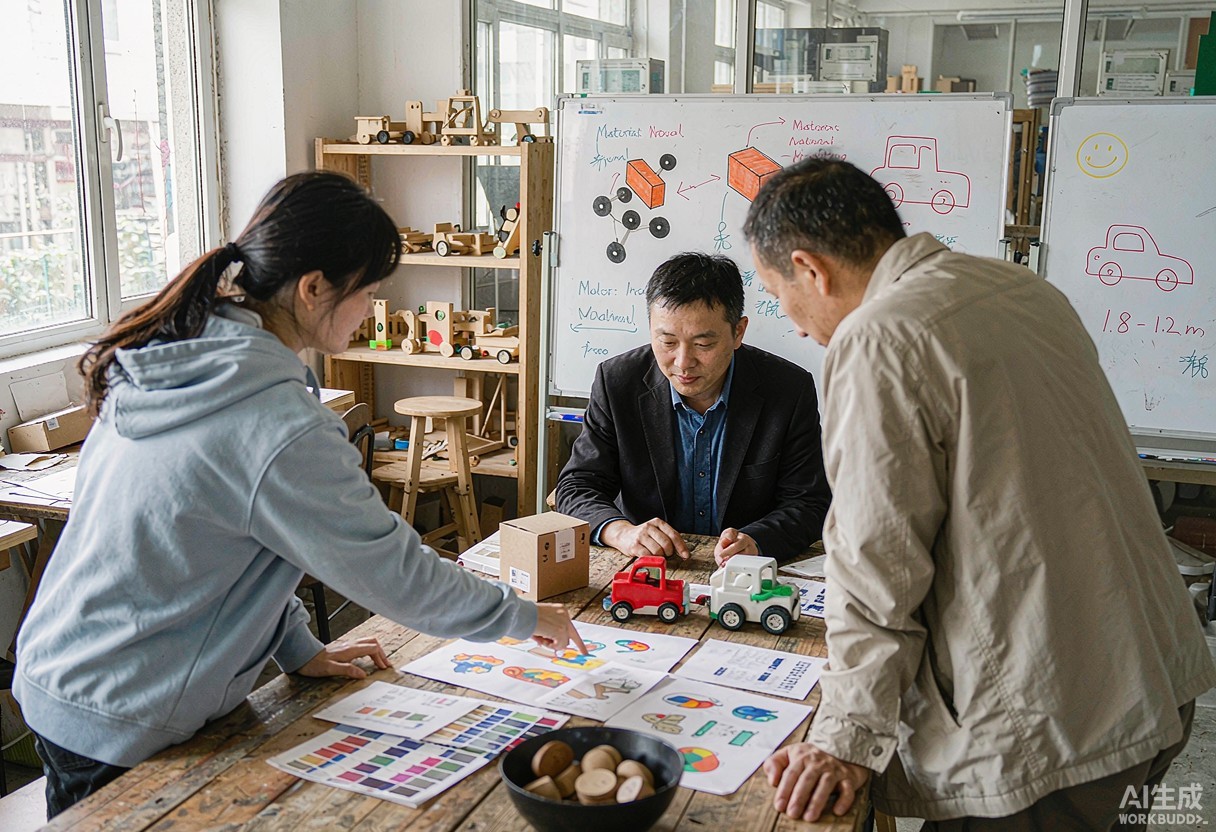
When a brand wants to ship a wooden toy that nobody else has, OEM is the fastest route from sketch to shelf. This guide explains what an OEM wooden toys manufacturer actually does, the six-step development cycle, realistic tooling and MOQ numbers for 2026, and the compliance work that has to happen in parallel with design.
It is written for brand owners, private-label buyers and product developers who already understand wholesale pricing and MOQ and now want to move up the value chain into a custom wooden toys OEM China program. Whether you call the relationship a wooden toy OEM China partnership, a custom wooden toys China build, or a long-term wooden toy OEM supplier engagement, the engineering and compliance work below is the same.
What Does OEM Mean in the Wooden Toy Industry?
OEM stands for Original Equipment Manufacturer. In practice, an OEM wooden toy manufacturer — whether you search for an OEM wooden toy manufacturer by name, a custom wooden toys manufacturer, or a wooden toy custom manufacturer China partner — produces a product to a buyer-owned design (drawings, CAD files, Pantone colors, packaging artwork) and ships it under the buyer's brand. The factory owns the production line, the tooling and the QC system. The brand owns the IP and the customer relationship.
That separation is the whole point. Custom molded plastics, CNC-routed wood, paint-and-finish tooling, and retail-ready packaging are capital-intensive activities. According to Klugonyx's 2026 emerging toy brand playbook, single-cavity production-grade steel molds for ABS or PP components run USD 5,000–25,000 each; multi-component toys needing three to five molds total USD 15,000–75,000, and complex sets with electronics often exceed USD 50,000–100,000+. Most brands can only justify that capital spend if the product is theirs alone.
For wooden toys specifically, OEM sits between two other models:
- ODM — the factory supplies the design, you rebrand it. Lower tooling cost, faster, but no exclusivity. We compare the two in our OEM vs. ODM wooden toys piece.
- Wholesale / OBM — you buy an in-stock line and apply your label. Lowest cost, zero tooling, but no differentiation.
If your goal is to bring a new shape, mechanism, colorway or branding element to market, OEM is the right model. If your goal is to test whether a category is worth entering, ODM or wholesale is usually a better starting point.
When Should a Brand Choose OEM Wooden Toys?
OEM is the right call when at least three of these are true for your business:
- You have proof of demand. A clear wholesale or retail channel, an established customer base, or a successful pilot of a similar generic product. OEM is not a research project.
- The product is part of a long-term line. You plan to reorder the same mold across multiple SKUs, colorways or co-brands over 18–36 months. Tooling has to amortize across that horizon.
- Differentiation is structural, not cosmetic. A custom shape, a new mechanism, a patented material — not just a logo on a stock toy.
- Your margins depend on exclusivity. Marketplace data on private-label children's toys shows gross margins of 48–60% for custom branded products vs. 18–22% for generic white-label — roughly 2.7× — alongside conversion rates that are about 2× higher and return rates that are about 70% lower.
If those conditions don't hold yet, start with a smaller ODM or wholesale order to validate sell-through. An experienced wooden toy OEM supplier will tell you this directly — if they push you straight into tooling without asking about reorder plans, that is a red flag. For a side-by-side model comparison, see our OEM vs. ODM guide; for end-to-end private-label mechanics, our private-label wooden toys guide walks through artwork, dieline and barcode workflow.
The OEM Wooden Toy Development Process
The OEM development cycle has six standard stages. Timelines below come from a composite of manufacturer and brand-published schedules and reflect current 2025–2026 ranges.
Product Brief and Design Review
The factory's design team reviews your brief, CAD or sketches and target cost. They return a feasibility memo covering material choice, paint system, compliance target markets and a preliminary cost breakdown. For a typical wooden toy this takes 5–10 business days.
A good brief specifies target retail price (so the factory can engineer to a cost ceiling), age grading, intended markets, and the certifications you require. Our Forestoy home page lists the markets and standards we routinely support, but the brief is where you set the targets.
Prototype and White Mockup
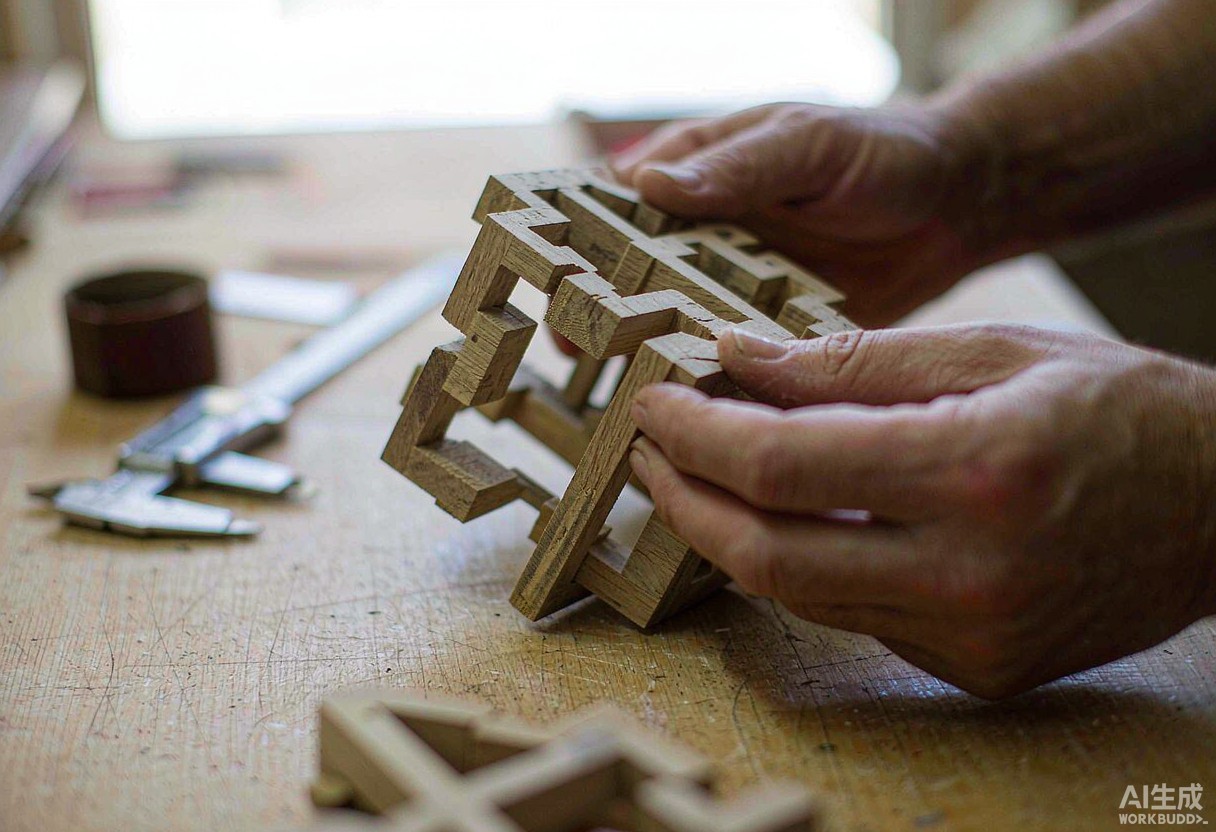
The factory produces a 3D-printed or CNC-machined white mockup — a non-finished prototype in the correct geometry, used to check shape, ergonomics, scale and balance. A white mockup is not a sales sample; it is a form-and-function check. Cost for a small wooden toy is typically USD 50–300 per design.
Physical Testing and Revision
The white mockup is put through in-house tests — drop, torque, bite-and-pull, small-parts, paint adhesion. Findings feed a revised CAD. Two revision rounds are normal for a wooden toy; three rounds suggest the brief was not specific enough.
Final Prototype Approval
A fully finished prototype — painted, packaged, with all specified trims and graphics — is sent to the brand for written sign-off. This is the single most important milestone in the project; once you approve, tooling begins and design changes become tooling changes.
Packaging Proof and Pre-Production
The packaging artwork is printed on the actual substrate and assembled into a dummy unit. Color is matched against Pantone or RAL references under D65 light. The retail barcode (EAN/UPC), warnings, age grading and country-of-origin are confirmed.
Mass Production and Inspection
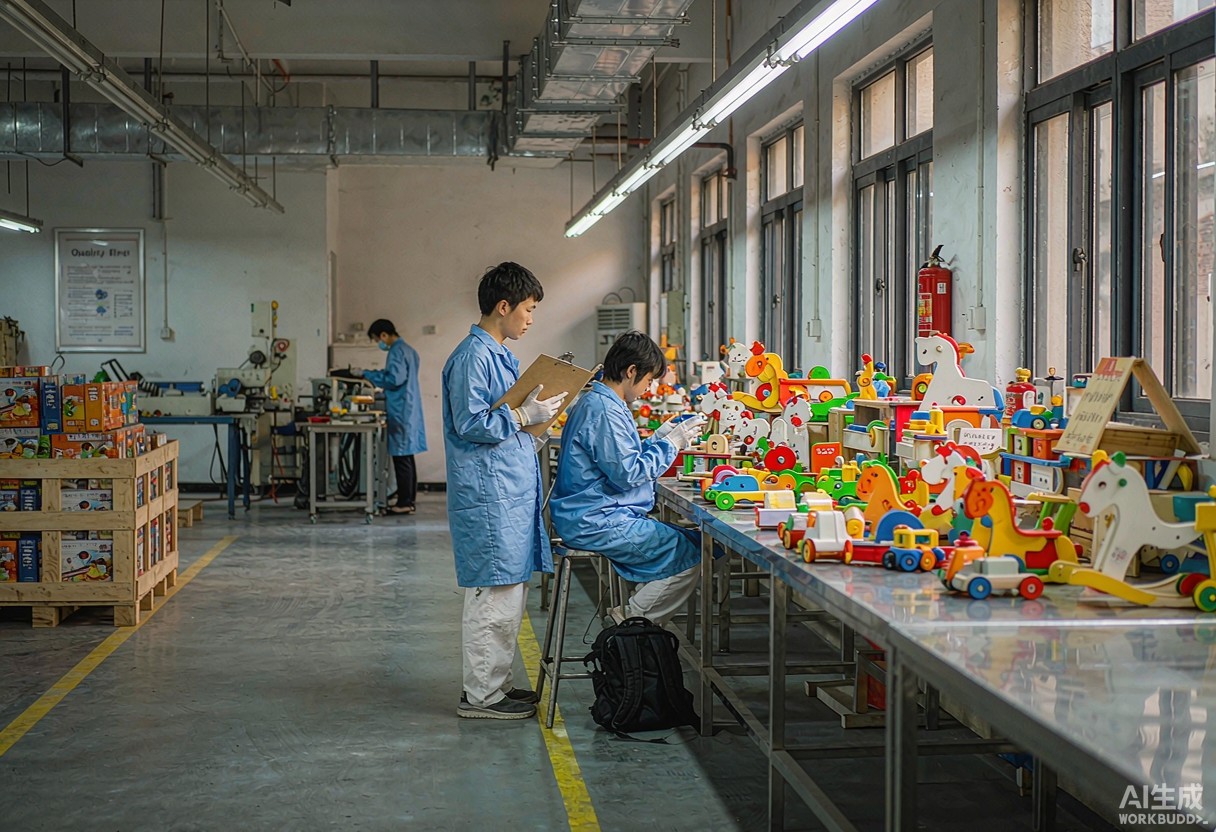
The factory runs the production run, performs in-line and final inspections under AQL 1.5 / 2.5 sampling, and issues a pre-shipment inspection report. Mass production for a wooden toy usually takes 45–60 days after T0 sample approval. Add 7–14 days for ocean freight to a US or EU port and the total OEM timeline from design freeze to goods-on-water is typically 80–120 days.
What Can Be Customized?
Modern wooden-toy OEM programs cover four customization layers. Each layer adds cost and lead time; the art is to spend on the layers that change the consumer's perception of the product.
Shape and Function
The single biggest investment. A new shape almost always requires CNC programming plus possibly new tooling for any non-wood components (magnets, hardware, acrylic windows, electronics). This is the layer that justifies the OEM model in the first place.
Colors and Finishes
Water-based paints, stains, lacquers and waxes can be matched to Pantone or RAL. Custom color matching adds about USD 200–600 to setup and 5–7 days to sampling. Always request a production-finish sample under daylight — monitor proofs are unreliable for wood.
Branding
Pad printing, hot stamping, screen printing, laser engraving and direct UV printing all work on coated wood. The right method depends on the substrate, the volume and the size of the mark; your OEM partner should recommend one based on durability testing rather than price.
Packaging
Retail box, window box, kraft belly band, blister, display tray or polybag — each has a different cost-per-unit and a different shelf impact. Packaging artwork is usually the single largest non-product cost in a wooden toy OEM project (often USD 1,500–5,000 for a print-ready dieline plus initial print plates).
OEM Costs, MOQ and Lead Time
The numbers below reflect 2025–2026 OEM wooden toy project ranges from published manufacturer quotes, buyer playbooks and our own factory data. Treat them as planning ranges, not fixed prices.
Many factories offset tooling cost against a minimum first-batch quantity — for example, USD 8,000 tooling may be waived if the first order is 5,000+ units. That is a real saving, but only useful if the first order actually moves. A Toy Association member survey cited in the Klugonyx 2026 white paper found 87% of mid-size and 81% of small toy companies reporting delayed orders amid 2026 tariff volatility. Lock tooling only after you've sold into or committed distribution for the first run.
If you are new to custom wooden toy manufacturer sourcing, the safer route is to start with a smaller ODM-based pilot (you can read our B2B blog index for a comparison) and graduate to full OEM once the SKU has demonstrated sell-through.
How Forestoy Supports OEM Wooden Toy Development
Forestoy runs OEM wooden toy programs from brief through mass production under one roof. Our factory handles CAD review, white mockup, tooling, finishing, packaging and AQL inspection in-house; for brands that want a turnkey solution we also offer private-label packaging and assembly built on the same production line. Quality control at every stage follows the protocols described on our quality control page, and the development workflow is documented on our design and development page.
What that looks like in practice for a typical OEM engagement:
- Brief review. Send drawings, references, target markets and a target FOB price. We respond within two business days with feasibility, cost range and lead time.
- White mockup. Form-and-function prototype in 5–10 days, USD 50–300 per design.
- Finished prototype + tooling plan. Painted, packaged sample plus a written tooling quote with a single combined unit cost for the planned reorder volume.
- Mass production. 45–60 days with in-line and final AQL inspection; PSI report and photos before shipment.
- Logistics. FOB Ningbo, EXW or DDP terms; we can coordinate with your nominated freight forwarder or recommend one.
You can see the breadth of OEM-compatible products in our wooden toys catalog; it includes stacking toys, puzzles, pretend-play sets and educational ranges that are common starting points for an OEM project. For brands that already have artwork but no factory, our packaging and labeling service is a clean way to bring an existing line through compliance and onto retail shelves without taking on full tooling risk. If you are still deciding between a small ODM pilot and a full OEM build, the wholesale pricing guide is the right place to anchor your cost model.
Start Your Custom Wooden Toy Project
Send your drawings, references or product brief and we'll reply with feasibility, a cost range and a development timeline within two business days.
Sources: Klugonyx (2026). The Emerging Brand's Playbook for the U.S. Toy and Game Industry. Private-label vs. white-label performance metrics; tooling cost ranges; 2026 tariff impact on order timing.
Toy Association member survey, via Klugonyx white paper (May 2026). 87% / 81% delayed-orders figure.
CPS Toys (2026). Private-Label OEM Process Guide. Sample lead times, tooling amortization and ownership norms.
EDN Toy (2026). Mold Cost and Total Cost of Ownership. Silicone / aluminum / steel mold family decision rules.
Forestoy internal OEM project records, 2024–2026.