8 Wooden Toy Industry Trends Shaping the Market in 2026
- Share
- publisher
- Forestoy
- Issue Time
- Jul 31,2026
Summary
Discover 8 wooden toy industry trends shaping product development in 2026, from Montessori and open-ended play to sustainability, e-commerce and OEM/ODM.
8 Wooden Toy Industry Trends Shaping Product Development in 2026
What is changing in the wooden toy industry in 2026?
The wooden toy category is evolving beyond traditional blocks, puzzles, and classic wooden games. For brands and retailers, the biggest changes are happening in how toys are designed, what value they deliver, how consumers discover them, and how brands develop differentiated products.
In 2026, successful wooden toys increasingly combine educational value, open-ended play, responsible materials, premium design, e-commerce convenience, and customization.
This article examines 8 key wooden toy industry trends that can help brands identify new product opportunities and make better sourcing and product-development decisions.
Looking for market size, growth drivers, and global opportunities? Read our 2026 Global Wooden Toy Market Trends Report
1. Educational Value Is Becoming a Core Product Feature
Parents and educators increasingly expect toys to offer meaningful play experiences rather than entertainment alone.
This is creating demand for wooden toys that support:
✔ Fine motor skills
✔ Problem-solving
✔ Creativity
✔ Concentration
✔ Spatial awareness
✔ Early numeracy
✔ Social interaction
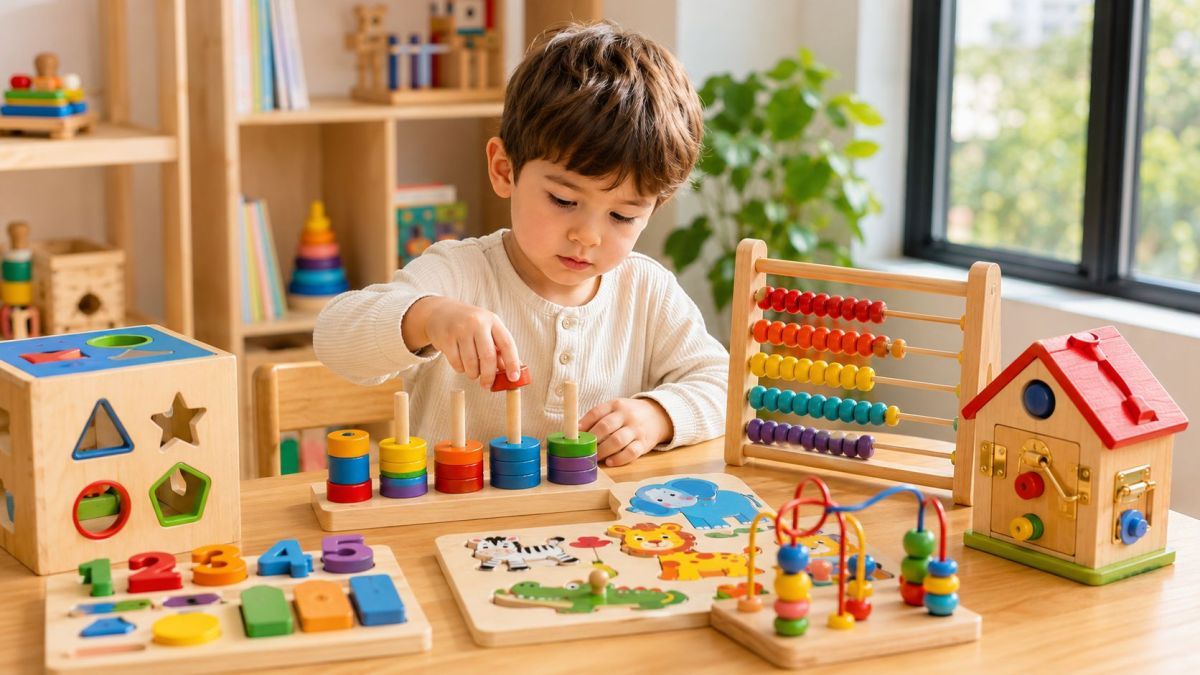
The important shift is that education is increasingly being built into product design rather than added as a marketing message.
For example, a wooden sorting toy can support color and shape recognition. A construction set can encourage spatial reasoning and creativity. A wooden game can introduce strategy and turn-taking.
Product Opportunity
Brands can strengthen their collections by connecting each product with a clear developmental benefit:
Toy → Activity → Skill → Learning Outcome
This approach can also make product pages easier to communicate across retail and e-commerce channels.
Related article: How to Choose the Perfect Wooden Educational Toy for Every Age
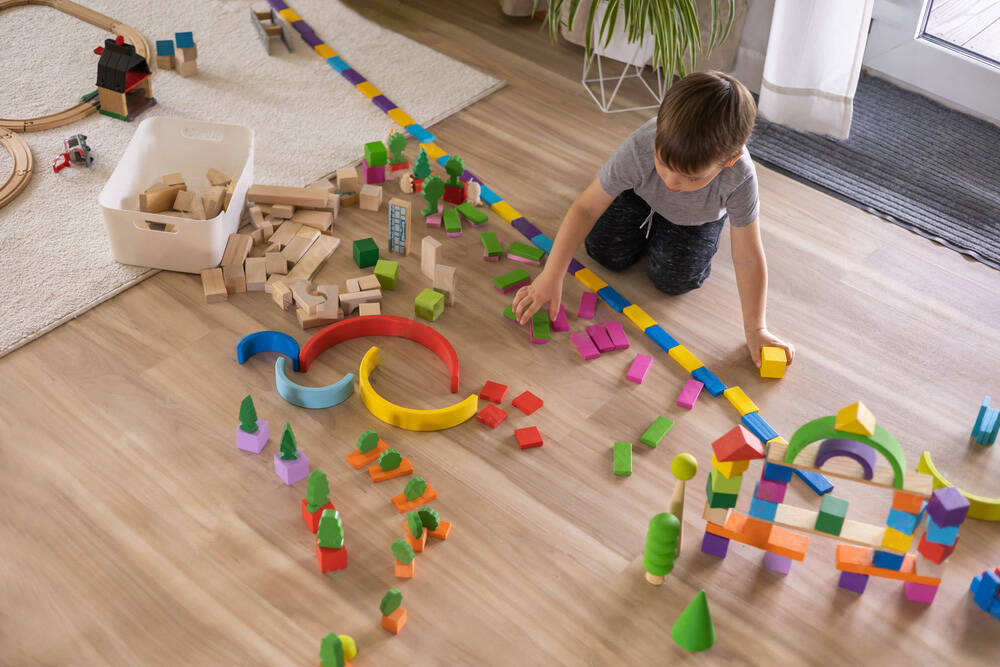
2. Open-Ended Play Is Changing Wooden Toy Design
Children do not always need toys with one correct way to play.
Open-ended products allow children to decide what the toy becomes.
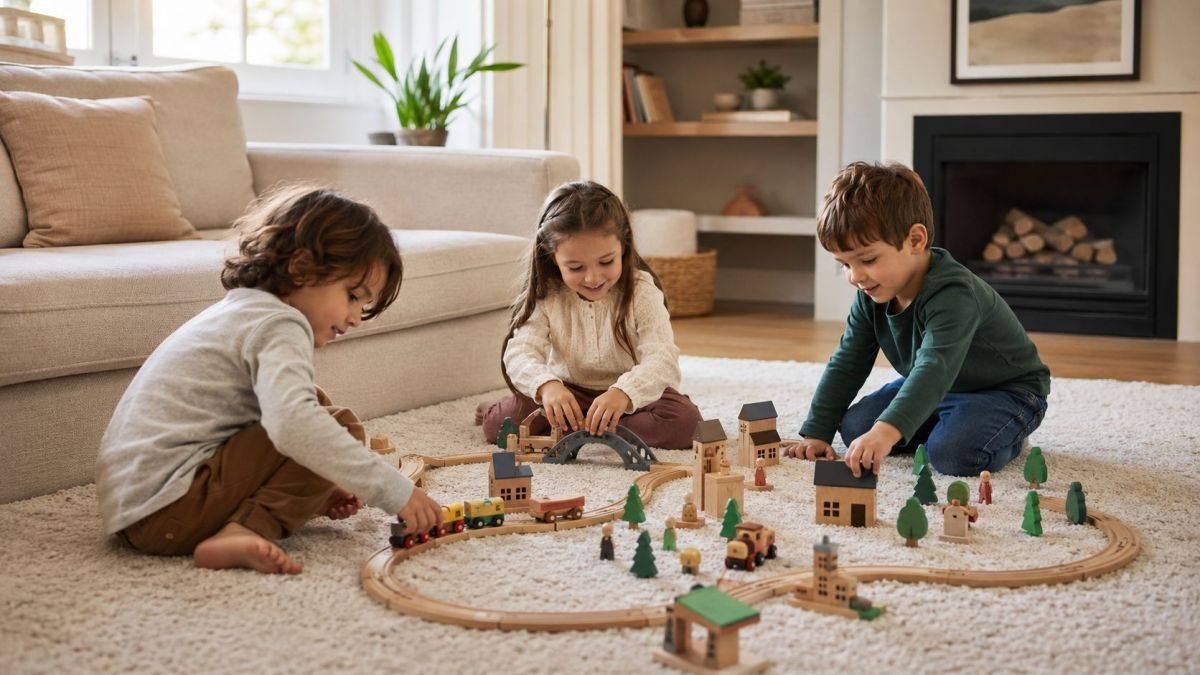
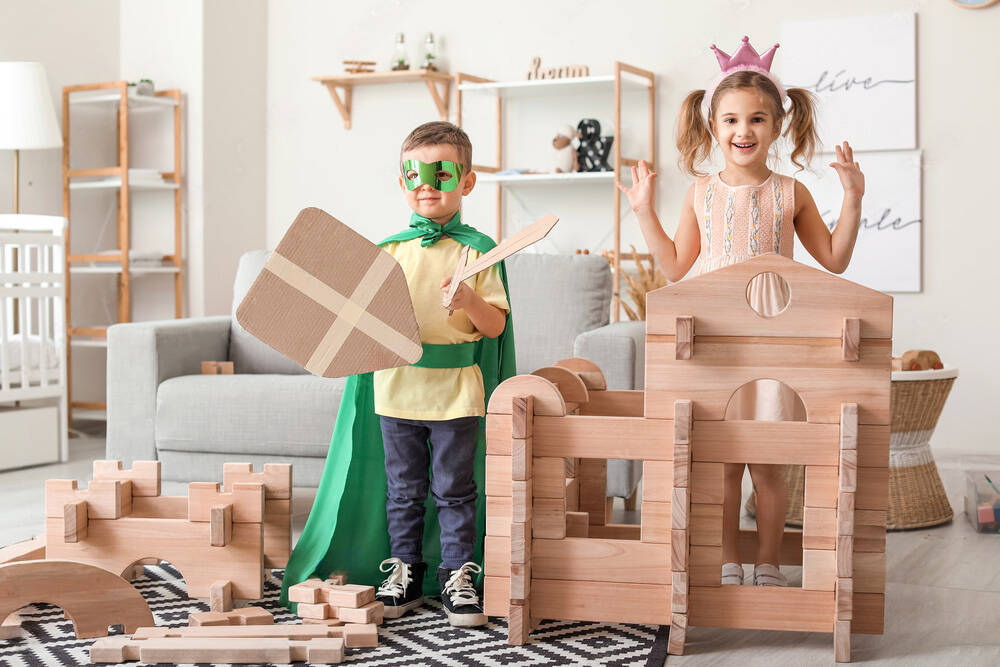
A wooden block set can become a house, bridge, castle, farm, or city. A wooden train system can evolve into a complete imaginary world with tracks, buildings, vehicles, figures, and accessories.
This flexibility encourages:
Imagination
Creativity
Problem-solving
Independent play
Storytelling
Collaboration
For brands, open-ended design can also create an important commercial advantage: one core product can support multiple play scenarios and additional product extensions.
From Single Toy to Play System
Instead of developing isolated products, brands can consider collections such as:
Wooden Train System
Tracks → Bridges → Stations → Vehicles → Buildings → Figures
or:
Wooden Farm Collection
Farmhouse → Animals → Tractor → Fences → Trees → Accessories
This creates opportunities for repeat purchases and cross-selling while giving children more ways to play.
3. Montessori-Inspired Products Continue to Influence Product Development
Montessori-inspired learning remains highly relevant to wooden toy design because it emphasizes hands-on activity, independence, concentration, and practical skills.
Popular product directions include:
Shape sorters
Stacking toys
Counting activities
Fine-motor toys
Practical-life products
Wooden puzzles
Learning towers
Balance products
However, simply putting “Montessori” on packaging is not enough.
A stronger product should have a clear connection between the activity and the developmental purpose.
For example:
Practical Activity → Independent Action → Fine Motor Practice → Confidence
This gives brands a more meaningful product story and helps retailers explain the value of the product to parents.
For manufacturers, Montessori-inspired development also creates opportunities for customization in size, difficulty, color, packaging, and age positioning.
👍Explore Forestoy Custom Montessori Toys.
4. Screen-Free Play Is Increasing the Value of Physical Toys
Children's lives are increasingly connected to digital devices.
This creates an interesting opportunity for physical toys.
Parents may actively look for experiences that encourage children to:
🌲 Build
🌲 Touch
🌲 Move
🌲 Imagine
🌲 Create
🌲 Interact with others
Wooden toys are naturally suited to this type of hands-on experience.
A wooden train requires children to physically connect tracks. A puzzle requires manipulation and problem-solving. A pretend-play set encourages storytelling and role-play.
The key opportunity is therefore not simply to market wooden toys as “screen-free.”
Instead, brands should demonstrate what children can do with their hands, imagination, and other people when the screen is removed.
This makes lifestyle photography particularly important for e-commerce product pages.
5. Sustainability Is Moving From Material Choice to Product Strategy
“Made from wood” does not automatically mean “sustainable.”
In 2026, sustainability increasingly needs to be considered across the complete product lifecycle:
Material sourcing → Manufacturing → Finishing → Packaging → Product lifespan
For wooden toy brands, this can include:
🍀 FSC-certified or responsibly sourced wood
🍀 Appropriate water-based or non-toxic coatings
🍀 Durable construction
🍀 Reduced unnecessary plastic
🍀 Recyclable packaging
🍀 More efficient packaging design
Forestoy identifies FSC-certified materials, sustainable sourcing, recyclable packaging, and environmentally responsible manufacturing among its sustainability practices.
This creates an opportunity for brands to build a stronger sustainability story around the whole product, rather than relying on the material alone.
A Better Sustainability Message
Instead of:
“This is a wooden toy.”
Consider:
“This product is designed around responsible materials, durable construction, thoughtful packaging, and long-term play.”
That is a much stronger proposition for modern consumers and retailers.
6. Premiumization Is Shifting Competition Beyond Price
The wooden toy category is increasingly suitable for premium positioning.
Consumers can evaluate a product based on much more than its basic function:
Material quality
Design
Safety
Durability
Craftsmanship
Packaging
Educational value
Sustainability
This means premiumization is not necessarily about making a toy more complicated.
It can be about making a simple toy better.
A premium wooden puzzle, for example, can differentiate itself through precise cutting, smooth finishing, attractive design, durable packaging, and a strong developmental concept.
What Premium Wooden Toys Need
For brands targeting premium retail or DTC customers, consider:
Better materials + Better design + Better finishing + Better packaging + Better storytelling
This combination can support higher perceived value and reduce dependence on price competition.
7. E-Commerce Is Changing How Wooden Toys Are Designed
E-commerce is changing not only where customers buy toys, but also how products need to be developed.
An online customer cannot physically touch the product before purchasing.
Therefore, successful e-commerce products need to communicate value visually and immediately.
Design for the Product Page
* A wooden toy intended for online sales should be evaluated for:
* Visual appeal
* Product photography
* Packaging dimensions
* Shipping efficiency
* Assembly requirements
* Product explanation
* Demonstration of educational benefits
* Customer unboxing experience
This is particularly important for DTC and private-label brands.
A product can be excellent in the playroom but difficult to sell online if its benefits are unclear or its packaging is inefficient.
Therefore:
The modern wooden toy needs to be designed for both the child and the product page.
This is also why manufacturers increasingly need to understand packaging, photography requirements, retail positioning, and e-commerce logistics during product development.
8. OEM/ODM Is Becoming a Product Development Advantage
One of the biggest changes in the wooden toy supply chain is the increasing role of manufacturers as development partners.
Traditionally, a brand might provide a finished design and ask a factory to manufacture it.
Today, many brands need support earlier in the process.
OEM Support
A typical OEM project may involve:
Customer design
Engineering optimization
Material selection
Prototype development
Testing
Packaging
Production
ODM Support
An ODM partner can contribute even earlier through:
Product concepts
Design development
Engineering
Prototyping
Material recommendations
Product testing
Production preparation
This is particularly useful for:
Start-up toy brands
Montessori brands
E-commerce sellers
Private-label businesses
Retailers developing exclusive collections
Forestoy provides OEM/ODM development support covering product design, prototyping, testing, customization, packaging, and production.
-----Explore Forestoy OEM & ODM Wooden Toy Manufacturing.
What These Trends Mean for Wooden Toy Brands
The eight trends point toward one major change:
The competitive advantage of a wooden toy is increasingly
determined by the value built around the product—not simply
the material it is made from.
A successful product may combine:
| Consumer / Market Need | Product Response |
| Learning | Educational and developmental functions |
| Creativity | Open-ended design |
| Independence | Montessori-inspired activities |
Hands-on play | Screen-free physical interaction |
Sustainability | Responsible materials and packaging |
Premium value | Better design and craftsmanship |
Convenience | E-commerce-friendly packaging |
Differentiation | OEM/ODM customization |
For brands, this means product development should begin with a question such as:
“What customer problem are we solving?”
rather than simply:
“What wooden toy should we manufacture?”
From Market Trend to Product Launch
A practical product-development process can follow five steps:
1. Define the Customer
Identify whether the product is intended for parents, educators, retailers, gift buyers, or e-commerce customers.
2. Define the Core Benefit
Choose the primary value: creativity, fine-motor development, STEM learning, practical life, social play, or physical activity.
3. Build the Product Concept
Select materials, functions, dimensions, accessories, and appropriate age positioning.
4. Validate the Prototype
Test usability, safety, durability, appearance, packaging, and manufacturing feasibility.
5. Build a Product Family
Consider extensions, accessories, complementary products, and multiple SKUs.
This approach can help transform a market trend into a commercially viable collection.

Why These Trends Matter for Forestoy
Forestoy has focused on wooden toy design, manufacturing, and export since 2003, supporting global brands, retailers, distributors, educational businesses, and e-commerce companies.
Its capabilities cover:
# Wooden educational toys
# Montessori toys
# Wooden games
# Pretend-play toys
# Outdoor wooden toys
# Learning towers
# DIY and craft kits
# OEM/ODM development
# Product customization
# Packaging development
The key advantage of an experienced manufacturer is not simply production capacity.
It is the ability to connect:
Market Trend → Product Concept → Prototype → Testing → Manufacturing → Market-Ready Product
For brands entering or expanding within the wooden toy market, this development capability can be as important as the factory itself.
Frequently Asked Questions
1. What are the most important wooden toy trends in 2026?
The most important trends include educational play, open-ended design, Montessori-inspired products, screen-free play, sustainability, premiumization, e-commerce optimization, and OEM/ODM development.
2. Are wooden toys still suitable for Montessori products?
Yes. Wood is well suited to hands-on, tactile and practical learning products. However, the product should provide a meaningful developmental purpose rather than relying only on the Montessori label.
3. What makes a wooden toy suitable for e-commerce?
Strong visual appeal, efficient packaging, clear product benefits, easy shipping, simple instructions, and a product story that can be communicated quickly online.
4. Why should brands consider OEM/ODM?
OEM/ODM can help brands reduce development complexity and gain access to design, engineering, prototyping, testing, packaging, and manufacturing expertise.
5. How can wooden toy brands differentiate themselves?
Brands can differentiate through educational value, open-ended play, sustainability, design, premium materials, packaging, customization, and product ecosystems.
Conclusion
The wooden toy industry in 2026 is not simply moving toward “more wooden toys.”
It is moving toward better-designed, more purposeful, more sustainable, more differentiated products.
The strongest opportunities are emerging where several trends intersect:
Educational value + Open-ended play
Montessori + Independence
Screen-free play + Family interaction
Sustainability + Premium design
E-commerce + Efficient packaging
Customization + OEM/ODM development
For brands, this creates an important shift in strategy.
The question is no longer:
“Can we manufacture this wooden toy?”
It is:
“Can we develop a wooden toy that customers value, children enjoy, and our brand can differentiate?”
That is where the right manufacturing and product-development partner can make the difference.
Ready to Develop Your Next Wooden Toy Collection?
Whether you are launching a new brand, expanding an existing collection, or developing a customized Montessori, educational, game, or pretend-play range, Forestoy can support your project from concept to production.